
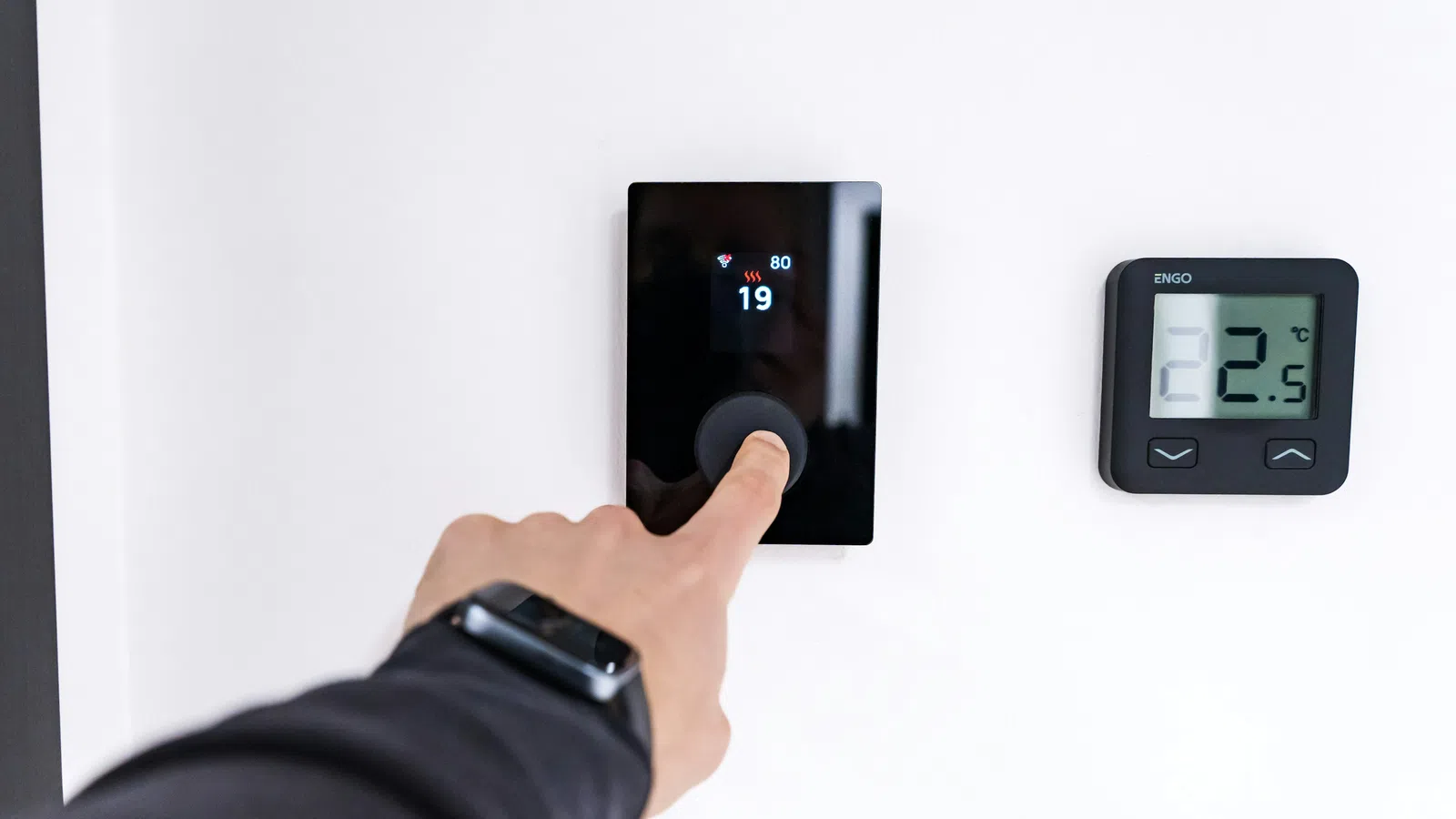
Your house can feel colder than the thermostat says because the thermostat only reads air temperature in one spot. Your body also loses heat to cold walls, windows, and floors, and it feels every draft moving across the room. In older Spokane homes with thin or empty walls, those cold surfaces and air leaks explain most of the gap.
Early November is usually when Spokane homeowners first notice it. The first hard freezes settle in, the furnace starts running for real, and the couch along the outside wall suddenly needs a blanket even though the hallway thermostat reads exactly what you set it to.
It shows up most in homes built before 1980: a brick ranch on the South Hill, a postwar house in Shadle or Garland, a bungalow in the Perry District, or an older home in the Garden District of Coeur d'Alene. Many of those houses went up with little or no insulation in the exterior walls, and the difference between the number on the wall and the way the room feels is your house telling you where the heat is going.
What is your thermostat actually measuring?
A thermostat measures the temperature of the air right around it, and nothing else. It does not know how warm the back bedroom is, how cold the living room window feels or whether there is a breeze along the floor of the den.
Most thermostats sit on an interior wall near the middle of the house, often in a hallway. That spot is usually one of the most protected places in the home, away from exterior walls and windows. So when it reads 70 degrees, it is reporting on the warmest, calmest air in the house.
The rooms you actually sit in can be a different story. A corner room, a room over the garage or an upstairs bedroom under a thin attic can feel chilly even when its air is close to the setting.
Why do cold walls make you feel cold in a warm room?
Your body is always trading heat with the surfaces around it. When the walls, windows and floor are close to your skin temperature, you lose very little heat to them. When those surfaces are cold, your body radiates heat toward them, and you feel chilled even if the air itself is warm. This is called radiant heat loss, and it is the main reason a 70 degree room can feel like a much colder one.
In a wall with no insulation, the inside surface of the drywall or plaster sits much closer to the outdoor temperature than it should. On a frosty November night, you can put your hand flat on an exterior wall in an older home and feel the difference compared with an interior wall.
Cold surfaces also make the air near them cooler. Air along a cold wall or window chills, gets heavier and slides down toward the floor, which sets up a slow, steady current of cool air across your feet. That is why some rooms feel drafty even when no outside air is getting in.
How do air leaks make a heated room feel drafty?
Air leaks add a second layer to the problem. Every older house has gaps where outside air gets in and warm air gets out, and moving air carries heat away from your skin much faster than still air does.
The engine behind most of those leaks is the stack effect. Warm air rises, so heated air pushes up and out through gaps in the ceiling and attic: around recessed lights, the attic hatch, plumbing stacks, chimney chases and the tops of interior walls. As that warm air escapes up high, the house pulls cold outside air in down low, through gaps around doors, windows, outlets, baseboards and the basement rim.
The colder it gets outside, the harder the stack effect pulls. That is why the same house can feel fine in October and drafty by mid November. The leaks were always there, and the cold weather simply turned up the pressure on them.
Why does this hit older Spokane and Coeur d'Alene homes so hard?
The Inland Northwest asks a lot of a house. The U.S. Department of Energy places both Spokane County and Kootenai County in Climate Zone 5, a zone defined by cold winters. The National Weather Service puts the normal annual heating degree days at the Spokane Airport at 6,463, which is a measure of how much heating a typical year demands. In plain terms, homes here run their heat for a long stretch of the year.
Late fall and winter can also bring valley temperature inversions, when cold air gets trapped near the ground under warmer air above. Those stretches often mean days of low cloud and very little sun, so the house gets almost no free warmth through the windows and the walls stay cold around the clock.
Then there is the age of the housing. Many homes in neighborhoods like Hillyard, Logan, Browne's Addition and the older parts of Spokane Valley and Post Falls were built before energy codes asked for much insulation. Some walls are completely empty. Others have older insulation that has settled over time, leaving a gap near the top of each wall cavity. ENERGY STAR estimates that 9 out of 10 homes in the U.S. are under-insulated, and older homes in a cold climate are a big part of that group.
How can you tell what is making your house feel cold?
You do not need special tools to get a good first read. Try these simple checks on the next cold evening.
- The hand test. Put your palm flat on an exterior wall, then on an interior wall in the same room. If the outside wall feels clearly colder, the wall cavity likely has little or no insulation.
- The outlet check. Hold the back of your hand near an outlet or light switch on an exterior wall. A cool breeze means outside air is moving through the wall.
- The tissue test. Hold a tissue or a strip of paper near the attic hatch, baseboards, window trim and door frames. Movement shows you where air is getting in or out.
- The room-to-room walk. Stand in each room for a minute. Note which ones feel colder than the hallway near the thermostat. Corner rooms and rooms over garages are common trouble spots.
- The attic peek. If you can safely look into the attic from the hatch, check how deep the insulation is and whether you can see the tops of the ceiling joists. Visible joists usually mean the attic is short on insulation.
What actually makes the house feel as warm as the setting?
The fix usually comes down to three jobs, and they work best together.
- Fill the walls. In older homes with empty or thin walls, USA Insulation Premium Injection Wall Foam fills the closed wall cavities from the outside. Small access holes are made behind a removed strip of siding, or in mortar joints on brick, then plugged and patched. Your interior drywall and plaster stay in place. Warmer wall surfaces mean less radiant heat loss from the people in the room.
- Bring the attic up to depth. ENERGY STAR recommends R-60 for an uninsulated attic in Climate Zone 5, or R-49 when adding to 3 to 4 inches already there. Blown-In Attic Insulation covers the attic floor evenly so the rooms below lose far less heat through the ceiling.
- Seal the leaks first. Air Sealing closes the gaps around lights, plumbing, wiring, chimney chases and the attic hatch before more insulation goes on top. Air sealing and insulation do different jobs: sealing stops the air from moving, and insulation slows the heat from passing through.
For the whole picture, ENERGY STAR estimates that homeowners can save an average of 15 percent on heating and cooling costs by air sealing and adding insulation in attics, floors over crawl spaces and accessible basement rim joists. Results vary from home to home, but comfort is often what people notice first: rooms that feel like the number on the thermostat.
Frequently asked questions
Why is one room always colder than the rest of the house?
Usually because it has more exterior wall, a garage below it, or a thin spot in the attic above it. Corner bedrooms and rooms over garages lose heat on more sides than an interior room does.
Is my thermostat broken if the house feels cold?
Probably not. If the thermostat reads the setting, it is likely working fine and the air near it really is that warm. The cold you feel is coming from surfaces and drafts elsewhere in the house.
Why does my house feel colder at night even at the same setting?
Outdoor temperatures drop after dark, so your walls and windows get colder and the stack effect pulls harder. Air temperature at the thermostat can stay steady while the rooms around you lose more heat.
How do I find out what is inside my walls?
A free in-home insulation inspection is the simplest way. We inspect your whole home, take photos of what we find and sit down with you to discuss your financing options.
Ready to feel the number on your thermostat?
If your rooms feel colder than the setting this November, your house is showing you where the heat is going, and that is good information to act on. Schedule a free insulation inspection with USA Insulation of Spokane-CDA, and we will check your whole home and help you decide what will make the biggest difference all year long.