
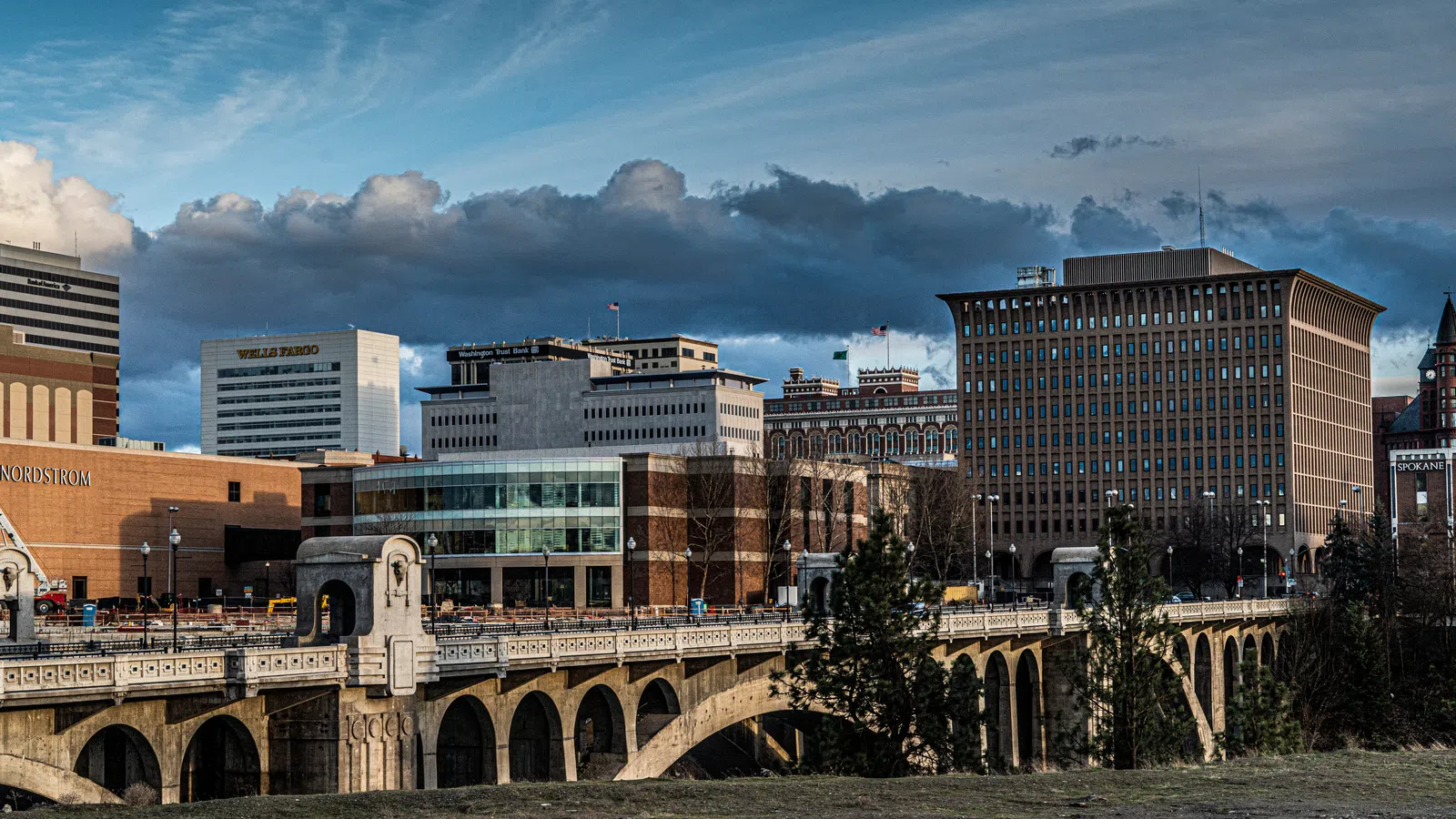
Spokane and Coeur d'Alene are in Climate Zone 5. For existing homes, ENERGY STAR recommends R-60 in an uninsulated attic (R-49 if you already have 3 to 4 inches), R-30 in floors over unheated space, and R-15 to R-19 on basement and crawl space walls. Empty exterior walls should be filled.
What climate zone are Spokane and North Idaho in?
Spokane County is in Climate Zone 5, specifically 5B, the drier half of the zone. Kootenai County is also 5B, so Coeur d'Alene, Post Falls, and Hayden share the same targets as the South Hill and Spokane Valley.
Head farther north and it gets colder on paper too. Bonner and Boundary counties (Sandpoint and Bonners Ferry) are Zone 6B, along with Stevens and Pend Oreille counties on the Washington side. That comes from the Department of Energy's county-by-county climate zone guide, which follows the 2021 International Energy Conservation Code (IECC).
Here is the good news if you live up north: ENERGY STAR groups Zones 5 and 6 together for existing homes. The recommended numbers below are the same for both.
What R-value does ENERGY STAR recommend for each part of the house?
R-value measures how well a material resists heat flow. Higher is better, and the total in each part of the house is what counts. ENERGY STAR publishes recommended levels for retrofitting existing wood-framed homes, based on the 2021 IECC. Here is what applies to Spokane and North Idaho.
|
Part of the house |
ENERGY STAR recommendation, Zones 5 and 6 (existing homes) |
|
Attic, currently uninsulated |
R-60 |
|
Attic, already has 3 to 4 inches |
Add up to R-49 |
|
Floor over unheated space (crawl space, garage) |
R-30 |
|
Exterior walls, empty cavities |
Fill the cavity. If the siding ever comes off, also add R-5 to R-10 insulative sheathing |
|
Exterior walls, already insulated 2x4 |
Add R-10 insulative sheathing when re-siding |
|
Basement or crawl space walls |
R-15 insulative sheathing or an R-19 batt |
Notice that walls do not get a single number. That is because an existing wall is limited by its depth. More on that below.
How does that compare to building code for new homes?
Code tells a builder the minimum for new construction. It is a useful yardstick, but your existing home is not required to meet it. The 2021 IECC sets these minimums for Zones 5 and 6:
- Ceiling: R-60
- Wood-frame walls: R-30 in the cavity, or R-20 plus R-5 of continuous exterior insulation, or R-13 plus R-10 continuous, or R-20 continuous
- Floors: R-30
- Basement and crawl space walls: R-15 continuous, R-19 in the cavity, or R-13 plus R-5 continuous
Washington and Idaho each adopt their own version of the code with amendments, so a builder's exact numbers can differ a bit. If you are building or adding on, your local building department has the final word.
How much attic insulation do you need?
R-60 if your attic is bare, R-49 if you are topping up three or four inches. We covered this in detail, including how to measure your own attic in about five minutes, in Attic Insulation in Spokane: How Much R-Value Do You Actually Need.
The short version: the attic is usually the easiest place to add a lot of R-value, and air sealing the attic floor first is what makes that R-value perform.
What R-value can you get in the walls of an older home?
This is where older homes fall furthest behind, and where the numbers need the most explaining.
Most older Spokane and Coeur d'Alene homes have 2x4 exterior walls, which leaves about three and a half inches of cavity. According to the Department of Energy, 2x4 walls can hold R-13 or R-15 batts. That depth sets a practical ceiling on what any insulation can do inside the wall.
New-construction wall levels like R-20 plus R-5 continuous rely on insulation outside the framing. That only makes sense when the siding is already coming off. For a finished house you are not re-siding, the realistic goal is the one ENERGY STAR gives: fill the empty cavity completely.
There are two common ways to do that without tearing out drywall:
- Injection foam. Foam is pumped into each cavity through small holes, fills around wiring and blocking, and cures in place. The holes are patched when the work is done. The finished R-value depends on the product and the depth of the cavity, so ask any installer for the product's R-value per inch in writing.
- Dense-pack cellulose. Cellulose is blown into the cavity at high density through similar holes. It is another established option for closed walls.
Either way, you are turning an empty wall into a full one. For a house that has had nothing in the walls since it was built, that is a big change in how the rooms feel, even though the wall will not reach new-construction numbers.
What about floors, crawl spaces, and basements?
If a room sits over a crawl space, an unheated garage, or a cantilevered bump-out, the floor is part of your home's shell. ENERGY STAR recommends R-30 for those floors in Zones 5 and 6.
The bedroom over the garage is the classic example. If yours is always the coldest room in the house, the floor is a likely culprit.
Crawl spaces can be handled two ways. You can insulate the floor above the crawl space to R-30, or you can insulate the crawl space walls (R-15 insulative sheathing or an R-19 batt) and treat the crawl space as part of the house. The second approach needs moisture control done right, so it is a call to make after someone has looked at your crawl space in person. Basement walls use the same R-15 or R-19 recommendation.
What do older Spokane and Coeur d'Alene homes usually have?
Every house is different, which is why we measure. But in the older homes we walk through in Garland, Shadle, West Central, the South Hill, and the older parts of Coeur d'Alene and Post Falls, the pattern is familiar:
- Attics with a few inches of settled insulation, often well short of R-49, and thinner still around the hatch, wiring, and anything stored up there.
- Exterior walls with little or nothing in them, especially in homes built before energy codes tightened.
- Floors over crawl spaces and garages with no insulation at all, or old batts that have sagged or fallen out.
- Crawl space and basement walls left bare.
Newer homes in Liberty Lake, Hayden, and the newer parts of Spokane Valley usually start closer to the targets, so the gaps tend to be smaller and more specific.
Which upgrade should you do first?
For most homes, the order looks like this:
- Air seal and insulate the attic. It is usually the most R-value for the effort.
- Fill empty exterior walls. Often the biggest comfort change in an older home.
- Insulate floors over unheated space. Especially under bedrooms and rooms over the garage.
ENERGY STAR estimates that sealing and insulating saves homeowners an average of 15 percent on heating and cooling costs, or about 11 percent on total energy costs. Your results depend on your home and how you heat it.
If you are an Avista Utilities customer, qualifying insulation work on an existing home may also be eligible for a rebate. Program rules and eligibility can change, so check myavista.com for current details [VERIFY ON MYAVISTA.COM]. We walk through what the program asks for in What Avista Utilities Requires for an Insulation Rebate. And if you want the basics of how heat actually moves through a house first, start with Before You Call: How Home Insulation Actually Works.
Find out where your home stands
A chart tells you the target. It cannot tell you what is actually in your attic, walls, and floors. Our free in-home assessment measures what you have, compares it to these recommendations, and shows you which gap is worth closing first.
Frequently Asked Questions
What R-value do you need for insulation in Spokane and North Idaho? Spokane and Coeur d'Alene are in Climate Zone 5. ENERGY STAR recommends R-60 for an uninsulated attic (R-49 if you already have 3 to 4 inches), R-30 for floors over unheated space, and R-15 to R-19 for basement and crawl space walls. Empty exterior walls should be filled.
Is Coeur d'Alene in the same climate zone as Spokane? Yes. Kootenai County and Spokane County are both Zone 5B. Bonner and Boundary counties farther north are Zone 6B, but ENERGY STAR's recommendations for existing homes are the same for Zones 5 and 6.
What R-value should walls be in Climate Zone 5? For new homes, the 2021 IECC calls for R-30 in the cavity or a combination such as R-20 plus R-5 of exterior insulation. For existing homes, ENERGY STAR recommends filling the empty wall cavity, and adding R-5 to R-10 insulative sheathing if the siding is replaced.
Can you add insulation to existing walls without removing drywall? Yes. Injection foam and dense-pack cellulose are installed through small holes, then the holes are patched. A 2x4 wall's depth limits the final R-value, so ask for the product's R-value per inch in writing.
What R-value do floors over a crawl space need in Spokane? ENERGY STAR recommends R-30 for floors over unheated space in Zones 5 and 6. Another option is insulating the crawl space walls to R-15 or R-19, which requires good moisture control.