For most older Spokane and Coeur d'Alene homes with empty or thinly filled walls, injection foam insulation is usually worth it. It fills closed walls from the outside, helps cut drafts and evens out room temperatures without interior demolition. It is less compelling when your walls are already insulated, have moisture problems or the attic is the bigger gap.
That is the short version. The longer version depends on your house, and that is what this guide is for. If you live in a 1950s rambler in Spokane Valley, a brick home on the South Hill or an older bungalow near downtown Coeur d'Alene, you have probably felt the chill coming off an outside wall on a January night.
Here is an honest look at the pros, the cons and the payback factors, including the cases where we would tell you to spend your money somewhere else first.
What does injection foam actually do to a wall?
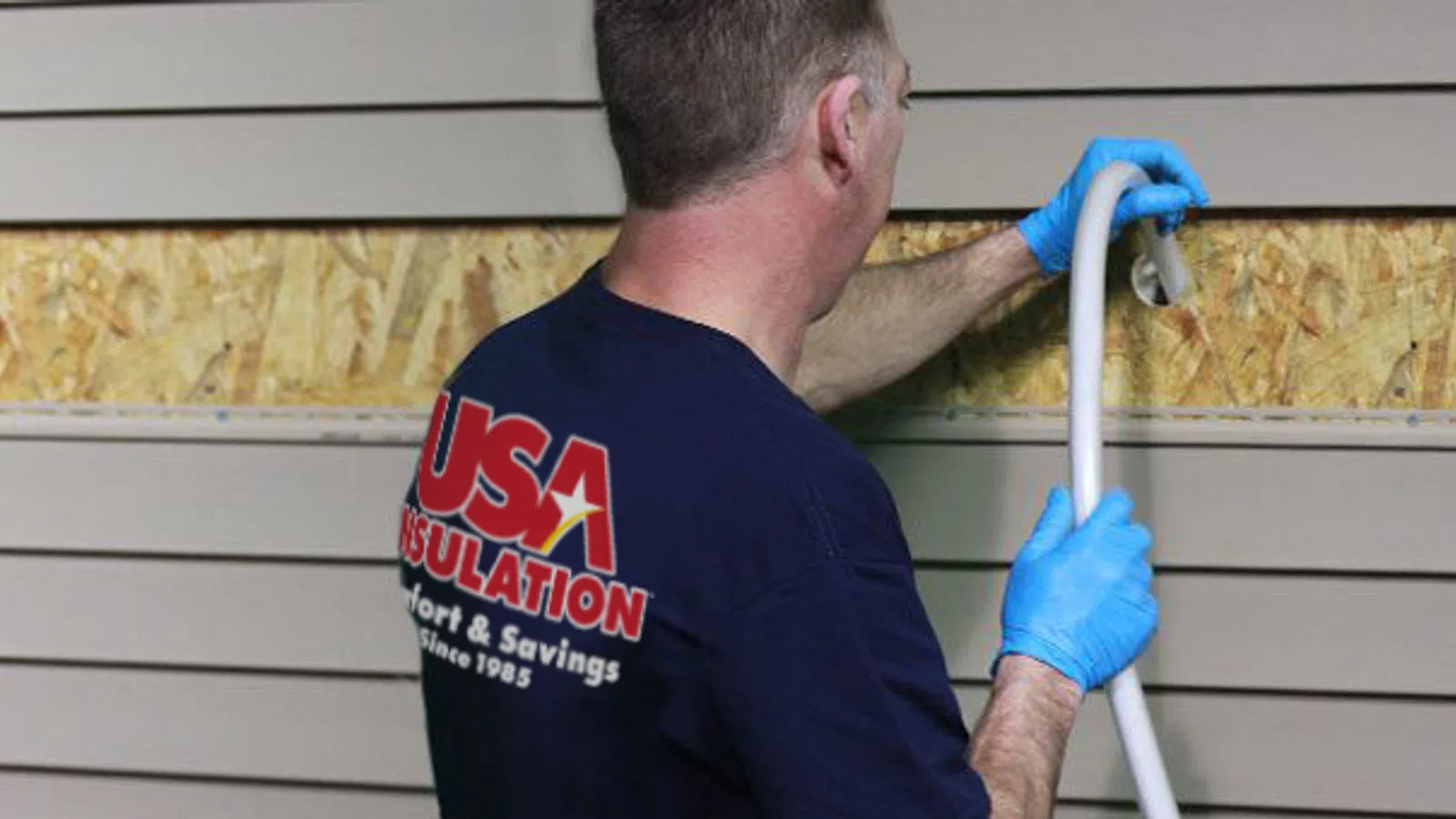
Injection foam is a wall insulation made for existing, closed walls. The crew works from the outside of the house, drills small holes into each wall cavity (behind a strip of siding, or in the mortar joints on brick) and fills the cavity with a foam that expands gently and sets in place.
Because it fills the space around wiring, pipes and odd framing, it does two jobs at once. It adds insulation where there was little or none, and it slows the air that leaks through gaps in an older wall. That combination is why homeowners often notice the difference near outside walls before they notice it on a bill.
When is injection foam insulation usually worth it?
The strongest cases look a lot alike. If two or three of these sound like your home, injection foam deserves a serious look.
- The walls are empty or under-filled. Many homes built before modern energy codes went up with little or nothing in the exterior walls, or with insulation that has slumped and left gaps near the top of each cavity.
- Outside walls feel cold to the touch. If you can put your hand on an exterior wall in winter and feel the difference, heat is moving through it.
- Some rooms never keep up. Corner bedrooms, rooms over a garage and rooms with two or three outside walls are often the first to feel better.
- You want no interior demolition. Opening drywall to insulate means dust, patching and repainting. Injection foam goes in from the outside, so the furniture and finished walls stay put.
- You plan to stay a while. The longer you live in the home, the more winters you have to enjoy the comfort and any savings. If you are moving next spring, the math is different.
When is injection foam less compelling?
There are homes where injection foam is not the first thing we would do, and a few where we would not recommend it at all.
- Newer homes with already insulated walls. If your walls were filled when the house was built, adding foam usually has little room to help. The attic or air sealing is often a better use of your budget.
- Walls with known moisture problems. Leaking windows, failed flashing, rot or water getting behind the siding need to be fixed first. Insulation is not a repair for a wet wall, and filling a wall with an active leak just hides the problem.
- Homes where the attic is the bigger gap. Warm air rises, and a thin or patchy attic can lose more heat than the walls. If your attic is far short of where it should be, start there and come back to the walls later.
A good assessment should tell you which of these camps your home falls into. If an estimator suggests filling walls that are already full, or skips over signs of water damage, that is worth a second opinion.
Empty wall vs. wall filled with injection foam: the quick answer
Here is a side-by-side look at the same exterior wall before and after, the way most homeowners experience it.
- Feel of the wall in winter: Empty wall, cold to the touch and drafty near outlets. Filled wall, closer to room temperature.
- Room comfort: Empty wall, rooms along outside walls run cooler than the thermostat. Filled wall, temperatures tend to stay more even from room to room.
- Air leakage: Empty wall, outside air moves through gaps around framing, outlets and trim. Filled wall, the foam fills those gaps inside the cavity and slows that air.
- Furnace workload: Empty wall, the heat runs longer to make up for what escapes. Filled wall, less heat escapes through the walls, so the system often runs less.
- Disruption to install: Empty wall, nothing to do. Filled wall, a day or so of exterior work with no interior demolition.
- Upfront cost: Empty wall, none. Filled wall, a real investment, sometimes offset in part by a utility rebate.
Takeaway: if your walls are empty and dry and you plan to stay, a filled wall usually wins; if not, look at the attic first.
What affects injection foam payback?
Payback is the question every skeptical homeowner should ask, and the honest answer is that it varies a lot from house to house. We will not give you a number here, because any number without your home in front of us would be a guess. These are the factors that move it.
- How much is in the walls now. This is the biggest one. Going from empty walls to filled walls is a large change. Topping off walls that already have some insulation is a smaller one, and the payback stretches out accordingly.
- How you heat the home. Natural gas, an electric furnace, baseboard heat, a heat pump and propane all cost different amounts per unit of heat. The more each unit of heat costs you, the more each unit you keep inside is worth.
- How long you plan to stay. Savings and comfort add up one heating season at a time. Ten winters in the house is a very different picture than two.
- Whether an Avista rebate applies. If you are an Avista customer, a residential insulation rebate may cover part of the project. Rebate amounts and eligibility change, so confirm the current details with Avista or with us before you count on it.
For a general sense of scale, ENERGY STAR estimates homeowners can save an average of 15 percent on heating and cooling costs by air sealing their homes and adding insulation. That is an average across many homes and covers more than walls, so your results will depend on your house and habits.
Why do Inland Northwest homes make a stronger case?
Where you live matters to this decision. Spokane County and Kootenai County are both in Climate Zone 5 on the U.S. Department of Energy's climate map, a zone defined by cold winters.
In a climate like ours, a wall that leaks heat does it for months at a time. That is one reason older homes here tend to get more out of filled walls than a similar house in a milder place.
It is also why the attic matters so much. ENERGY STAR recommends R-49 to R-60 in the attic for our climate zone, and many older homes fall short of that. If you live in an established neighborhood like Shadle, the Perry District or Midtown Coeur d'Alene, it is worth knowing where your attic stands. When we assess a home, we look at the walls and attic together so you can see which gap is bigger.
What are the honest cons of injection foam?
Every upgrade has trade-offs. Here are the ones worth knowing.
- It is a real investment. Filling every exterior wall in a house is not a small project, and it is not the right place to start if your attic is bare.
- You will see small patches on brick. On sided homes, the holes hide behind siding that goes back on. On brick, the patched mortar joints blend in but may be visible up close.
- Results depend on the install. Wall cavities have blocking, wiring and surprises. A crew that does not map the walls carefully can leave voids, so ask how they check their work.
- It does not fix other problems. Leaky windows, an open fireplace damper or a thin attic will still cost you heat after the walls are filled.
What should you ask before deciding?
If you are close to a decision, these questions will tell you a lot about whether injection foam fits your home and whether the company is being straight with you.
- Did you check what is in my walls now, and can I see the photos?
- Did you look at my attic, and is it the bigger gap?
- Do you see any signs of moisture that should be fixed first?
- What product do you use, and what are its R-value and specs?
- How do you handle brick, additions and walls with blocking?
- How do you confirm each cavity is full, and how do you document the finished work?
- Does my home qualify for a current Avista rebate, and how does that process work?
- Is financing available if I want to spread out the cost?
So, is injection foam a good investment for your home?
If your home is older, your walls are empty or thin, the walls are dry and you plan to stay, injection foam is usually a good investment in comfort, with payback that depends on how you heat and whether a rebate applies. If your walls are already full, have water issues or your attic is nearly bare, there are better first steps.
Not sure which side of the line your home falls on? Book an in-home estimate with USA Insulation of Spokane-CDA. We will check what is in your walls and attic, show you what we find and give you a straight answer on whether injection foam makes sense for your home.