
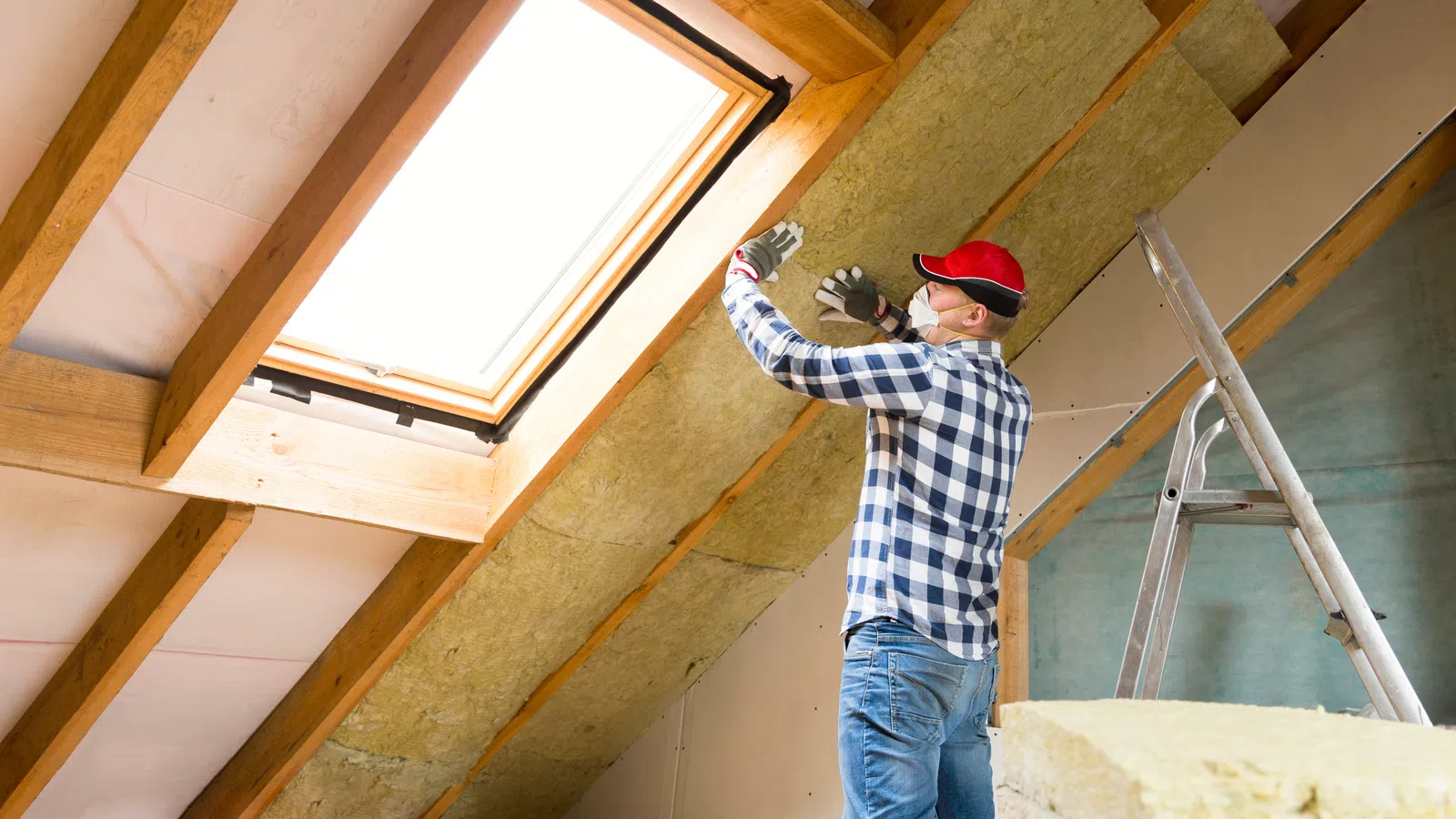
How much does it cost to insulate existing walls in Spokane?
Most Spokane homeowners insulating existing walls with injection foam land somewhere in the low-to-mid four figures for a typical single-family home, with national 2026 data putting retrofit foam at roughly $1.50 to $4.50 per square foot installed. Square footage, siding type, and wall access drive the number. A free in-home measurement gives you the exact price.
Why "it depends" is the honest starting point
Nobody likes that answer, so let's make it useful instead of vague.
Wall insulation is not a product you buy off a shelf in a fixed quantity. The price is a function of how much wall you actually have, what is in front of it, and how hard it is to get to. Two 1,600 square foot homes three blocks apart on the South Hill can quote very differently because one has cedar lap siding that comes off cleanly and the other has stucco over a 1920s wall.
What we can do is show you the ranges honestly, tell you what moves them, and let you sanity-check any quote you receive, including ours.
The 2026 numbers, plainly
Here is what published national cost data looks like for insulating existing walls this year.
Approach |
Typical installed cost per sq ft of wall |
Notes |
|---|---|---|
Injection foam (retrofit, closed walls) |
$1.50 to $4.50 |
No demolition required. Air seals as it fills. |
Blown-in cellulose or fiberglass (drill and fill) |
$1.25 to $2.50 |
Lower material cost. Can settle over time. |
Batt insulation (open walls only) |
$0.60 to $1.50 |
Cheapest material, but requires the wall to be open. |
Spray foam (open walls only) |
$1.50 to $4.50 |
Highest performance, but not an option for finished walls. |
Figures reflect 2026 national ranges reported by Angi and HomeGuide. Local pricing varies.
Angi's 2026 data puts a typical whole-home injection foam project at an average around $6,200, with most homeowners falling between roughly $4,300 and $8,500. HomeGuide's range for insulating all exterior walls of a 2,000 square foot house runs from about $1,700 to $8,500 depending on material and complexity.
That is a wide spread, and it is wide for real reasons. Here is what puts your project at the low end or the high end of it.
The seven things that actually move your price
1. Wall square footage, not floor square footage. This is the one people get wrong most often. A 1,500 square foot ranch has a lot less exterior wall than a 1,500 square foot two-story, because the two-story stacks its floor area on a smaller footprint. Wall area is what gets quoted.
2. Siding type. Vinyl and aluminum come off and go back on quickly, which keeps labor down. Wood lap siding is straightforward. Brick veneer, stucco, and asbestos-cement siding all take more time and more careful patching, and they cost more.
3. Number of stories. Second-story work means staging and ladders or lifts, which adds labor hours.
4. Cavity condition. Empty cavities fill cleanly. Cavities with partial old batt, blocking, or debris take longer and sometimes need extra access points.
5. Obstructions. Decks, mature landscaping, utility meters, and tight lot lines all slow down exterior access.
6. What else you bundle in. Attic insulation and air sealing are usually quoted alongside walls. Doing them together costs more up front but is meaningfully cheaper than three separate mobilizations, and it is the combination that actually fixes the house.
7. Pre-existing conditions. Active knob-and-tube wiring, moisture problems, or previously settled blown-in all need to be addressed before or during the work, and that shows up in the scope.
What a real quote should look like
If you take one thing from this post, take this. A quote you can trust has these things in it:
- Measured wall square footage, not an estimate from the curb
- A line item per scope area: walls, attic, air sealing, broken out separately
- The specific product being installed and its R-value per inch
- What happens to your siding and how the access holes get patched
- Timeline and whether it is a one-day job
- Warranty terms in writing
If a contractor gives you a single number with no measurement and no breakdown, you have no way to compare it to anything. Ask for the breakdown. Any legitimate installer will give it to you.
How to think about the payback
Wall insulation is not a purchase that ends when you write the check. It keeps paying, quietly, every month for as long as you own the house.
ENERGY STAR estimates that homeowners who air seal and add insulation save an average of 15 percent on heating and cooling costs, or about 11 percent on total energy costs. Homes that start out with empty walls, which describes a lot of pre-1980 Spokane and Coeur d'Alene housing, usually land at the higher end of that range because they have the most ground to make up.
Run the arithmetic on your own bills rather than on an average. Pull your last 12 months of energy usage, add up the heating and cooling portion, and take 15 percent of it. That is a conservative annual figure. Divide your quote by it and you have a rough payback in years.
Two things that number leaves out, both in your favor:
- It ignores comfort. The back bedroom being livable in January is worth something to you even though it does not appear on a bill.
- It ignores rising rates. The savings are a percentage, so they grow as energy prices do. A fixed-price improvement against a rising cost gets better with time, not worse.
Financing, and why waiting is its own cost
Most homeowners doing this work do not pay for it out of pocket in a single payment, and they do not need to. Financing on insulation work is common and generally straightforward, and the monthly payment is frequently in the same neighborhood as the monthly savings, which is the whole point.
That matters because the alternative to doing the work is not "spend nothing." It is "keep paying the higher bill." An under-insulated house charges you every single month whether you fix it or not. The question is not really whether to spend the money. It is whether you would rather spend it on the fix once or on the waste forever.
If cash flow is the obstacle, ask about financing terms specifically when you get your quote. Ask about the rate, the term, and whether there is a prepayment penalty.
A note on cheap quotes
You will occasionally see a number well below the ranges above. Sometimes that is a legitimately efficient contractor with an easy job. Often it is one of these:
- Partial coverage, for example only the north and west walls
- Material that will settle and leave the top third of your cavities empty in ten years
- No air sealing included, so you get R-value with the drafts left in
- No patching to speak of, and you discover that when you look at the siding afterward
Cheap and expensive both exist for reasons. Get two or three written, itemized quotes and compare the scopes, not just the totals.
Frequently asked questions
How much does injection foam insulation cost per square foot? 2026 national data puts installed injection foam at roughly $1.50 to $4.50 per square foot of wall, depending on foam type, siding, and access. Local pricing in the Spokane and Coeur d'Alene area falls within that range, and a measured quote will pin it down exactly.
How much does it cost to insulate the walls of a whole house? Angi reports a 2026 average around $6,200 for a whole-home injection foam project, with most homeowners between about $4,300 and $8,500. Smaller single-story homes commonly come in well under that average.
Is injection foam more expensive than blown-in? Usually somewhat, yes. Blown-in cellulose or fiberglass typically runs $1.25 to $2.50 per square foot compared to $1.50 to $4.50 for injection foam. The tradeoff is that foam air-seals as it fills and does not settle, so the performance you pay for on day one is the performance you still have in year fifteen.
Does wall insulation increase home value? It generally helps, particularly in an older home where buyers are actively worried about operating costs. It also shows up in the practical sense that a comfortable, efficient house shows better and gives a buyer one less thing to negotiate over.
Can I insulate just one or two problem walls? Yes, and sometimes that is the right call, for example a single freezing corner bedroom. Understand that partial work gives partial results. The house as a whole will still lose heat through the walls you skipped.
How long does the work take? Most single-family homes in this area are completed in one day, including patching and cleanup. Larger or more complex homes can run into a second day.
Do I need to be home during the install? It helps for the walkthrough at the start and end, but most of the work happens on the exterior, so you do not need to take the whole day off or move out.
Get your actual number
Ranges are useful for planning. They are not useful for deciding. We will measure your walls, look at your siding and access, and give you a written, itemized price with no obligation attached to it.
Get your free wall insulation quote
USA Insulation of Spokane and Coeur d'Alene | 509-862-5655