
The symptoms usually get blamed on the wrong thing
Drafts get blamed on windows. Dust gets blamed on the furnace filter. Condensation gets blamed on the weather. Sometimes those are right. Often they are downstream of the same underlying cause, which is that your house is exchanging far more air with the outdoors than you realize.
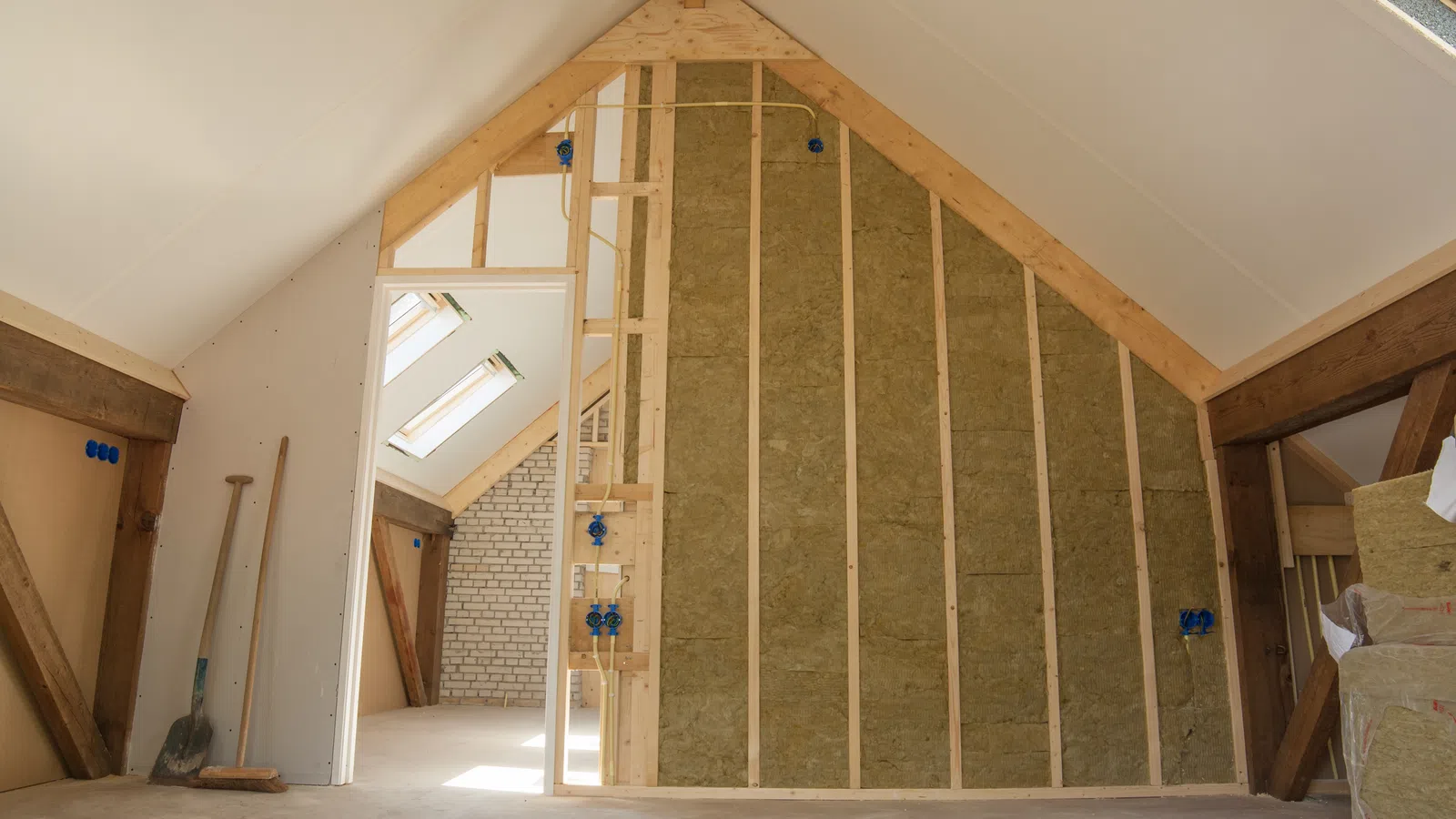
An older Spokane or Coeur d'Alene home with empty walls and a thin attic is not a sealed box. It is closer to a basket. Air moves in low, out high, and through the wall cavities in between, and it carries temperature, moisture, and particles with it.
Why a house pulls air through itself
Warm air rises. In winter, the heated air in your home pushes upward and escapes through gaps at the top of the house: around plumbing stacks, wiring penetrations, chimney chases, recessed light housings, and the top plates of interior walls.
Air that leaves has to be replaced, so the house pulls cold outside air in through every gap lower down. Rim joists, outlets on exterior walls, the sill plate, gaps around basement windows. This is the stack effect, and it runs continuously all winter without anyone opening a door.
The bigger the leak paths and the emptier the wall cavities, the more air moves. That single mechanism explains most of what follows.
From leak to symptom
What you notice |
What is usually behind it |
|---|---|
Drafts near the floor or at outlets |
Cold air being pulled in low to replace air escaping high |
A room that never matches the thermostat |
Heat loss through an empty wall outpacing what the register delivers |
Cold interior wall surfaces |
No insulation in the cavity, so the drywall tracks the outdoor temperature |
Condensation on walls or windows |
Warm indoor moisture meeting a surface cold enough to reach dew point |
More dust than seems reasonable |
Outdoor air entering through wall cavities, rim joists, and the attic floor |
Cold floors over a crawlspace |
Uninsulated floor assembly and air movement underneath |
The draft you feel is often not a draft
Here is something that surprises people. You can feel cold in a room with no measurable air movement at all, because your body loses heat by radiating it toward cold surfaces.
An uninsulated exterior wall in January can sit noticeably colder than the air in the room. Stand next to it and you radiate heat toward it, and you register that as a draft even though nothing is blowing. This is why homeowners sometimes replace windows, feel a modest improvement, and stay puzzled. The window was only part of the cold surface area. The wall around it was the rest.
Moisture is the one worth taking seriously
Comfort problems are annoying. Moisture problems cause damage, so this section deserves more care.
Air holds moisture, and warmer air holds more of it. When indoor air that is carrying moisture reaches a surface cold enough, that moisture condenses into liquid water. That is why you see it on single-pane windows first: they are usually the coldest surface in the room.
In an under-insulated wall, the cold surface is not only the window. It can be the wall itself, and in some assemblies it can be a surface inside the cavity where you cannot see it. Persistent condensation is what leads to mildew on wall surfaces, musty smells in closets against exterior walls, and staining in corners.
Insulating and air sealing raises the temperature of interior surfaces and cuts the volume of moist air moving through the assembly. Both of those reduce condensation risk.
What insulation will not fix
It is worth being straight about the limits, because moisture has several possible sources and only some of them are envelope problems.
- Bulk water. A roof leak, failed flashing, bad grading, or a plumbing leak is a repair job. Insulating around active water makes it harder to find, not better.
- Ventilation shortfalls. If bathroom and kitchen exhaust fans are missing, undersized, or vented into the attic, you are generating moisture indoors with nowhere for it to go.
- Indoor moisture sources. Unvented combustion heaters, drying laundry indoors, and a crawlspace with exposed dirt all add water to the air.
- A house that is genuinely too tight. Rare in pre-1980 housing stock, but real in newer construction, where mechanical ventilation is the answer rather than leaks.
A good assessment should tell you which of these is actually driving what you are seeing. If the answer is a roof leak, you want to hear that, not a quote.
Where the dust is coming from
Filters catch what moves through the ductwork. They do nothing about air entering the house directly through the building envelope, which in a leaky older home is a great deal of air.
That air comes through wall cavities, rim joists, and the attic floor, picking up whatever it passes on the way: dust from the attic, fiberglass fibers, soil gases from a crawlspace, and outdoor particulate. During wildfire smoke season in the Inland Northwest, that same path is how outdoor smoke gets in while every window stays shut.
Sealing the envelope means more of the air in your home arrives through a filter rather than around one.
What changes after
In an older home that gets air sealed and insulated properly, the pattern is fairly consistent. Rooms hold their temperature longer between furnace cycles. The gap between the warmest and coldest room narrows. Interior wall surfaces stop feeling cold. Condensation shows up less often on the coldest days. And the equipment runs less to hold the same setting.
The Department of Energy estimates that sealing air leaks and adding insulation together can cut heating and cooling costs by up to 20 percent for a typical home. The comfort change is usually what people mention first, though.
Find out what is actually causing it
Drafts, condensation, and dust are symptoms, and they do not all trace back to the same thing. A free in-home assessment looks at the whole envelope and tells you what is driving what you are noticing. [insert quote link]
Frequently asked questions
How does poor insulation affect your home's air and comfort? It lets outdoor air move through the building continuously, carrying dust and moisture with it. That produces drafts, uneven room temperatures, cold interior surfaces, condensation, and more dust than a filter alone can handle.
Why does my house feel drafty when the windows are closed? Warm air escapes through gaps high in the house and pulls cold air in low to replace it. You can also feel cold standing near an uninsulated wall with no air movement at all, because you radiate body heat toward the cold surface.
Can insulation stop condensation on my walls? It helps, by raising interior surface temperatures and reducing the moist air moving through the assembly. It will not fix condensation caused by a leak, missing exhaust ventilation, or an unvented moisture source indoors.
Does insulation reduce dust in a house? Air sealing does. Dust rides in on air entering through wall cavities, rim joists, and the attic floor, which never passes through your furnace filter. Sealing those paths means more incoming air is filtered.
Should I fix insulation or ventilation first? It depends on what an assessment finds. Bulk water and missing exhaust ventilation get addressed first, because insulating around an active moisture source hides the problem instead of solving it.