
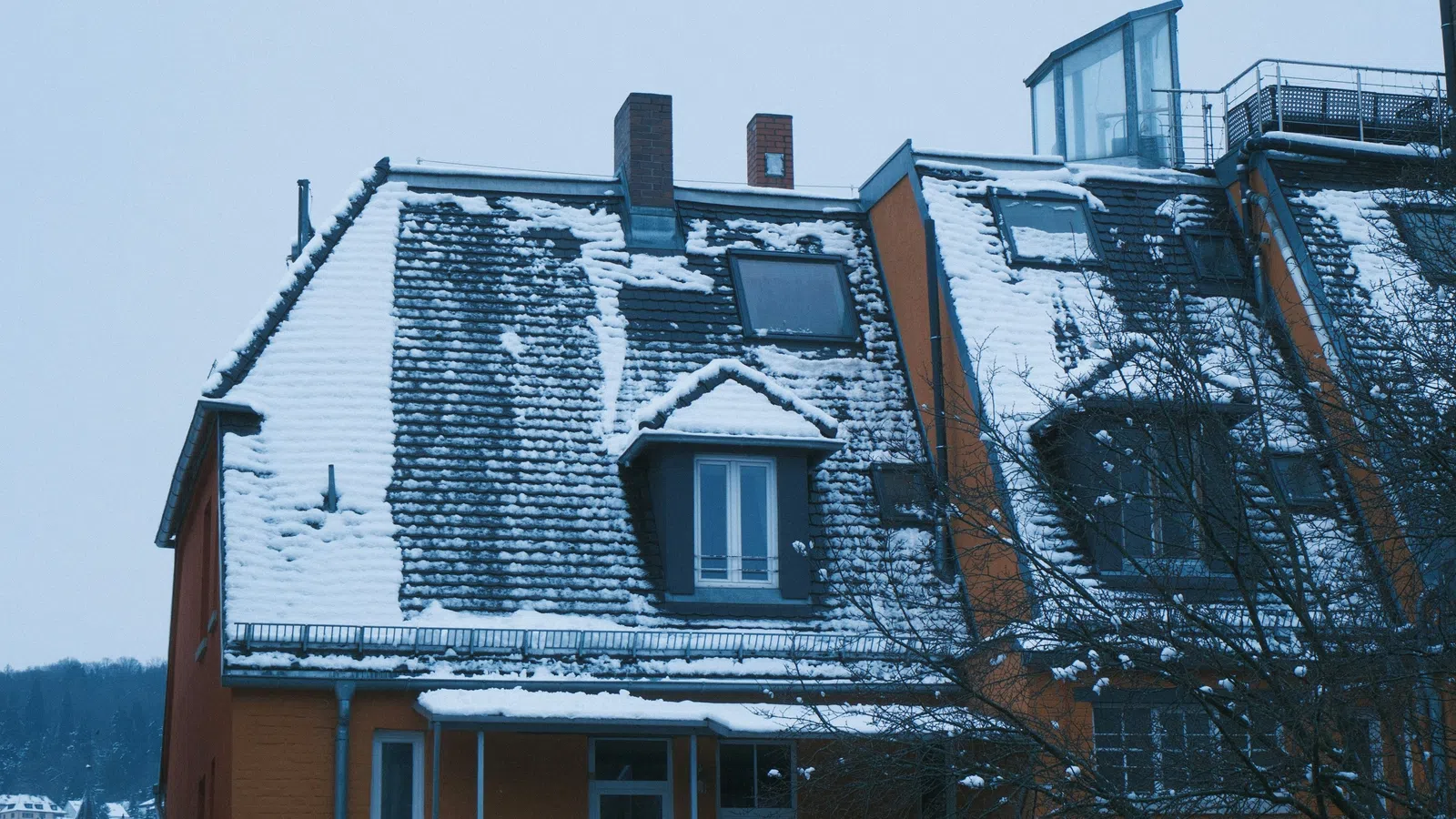
Your Bowling Green home feels dry in winter because cold air leaking in from outside carries very little water, and heating it makes the air even drier relative to what it could hold. A leaky house swaps its indoor air for that dry air all day. Sealing the leaks slows the swap, so the house keeps more of its moisture.
It tends to sneak up on you around Thanksgiving. The heat has been running for a few weeks, the static shocks start, the wooden trim around the old doors develops new cracks, and the floorboards in the hallway open up a little.
Around southern Kentucky, it is often worst in the houses with the most character. A tall farmhouse outside Russellville, an older two-story near Western Kentucky University in Bowling Green, or a county home in Greenville or Hartford that leans on a wood stove on cold nights can all feel bone dry by January.
What actually makes winter air so dry indoors?
Cold air simply cannot hold much water. On a frosty morning in Warren County, the air outside may be close to saturated for its temperature, yet it contains only a small amount of moisture.
Bring that air inside and warm it to room temperature, and the picture changes. Warm air could hold several times as much moisture, so the same small amount now reads as very low relative humidity. That is the air you feel on your skin and in the static on your sweater.
The furnace or heat pump is not removing water. It is warming the dry air that keeps leaking in.
Why does a leaky house dry out faster?
Because a leaky house replaces its air more often. Every hour, some of your warm, slightly moist indoor air escapes and an equal amount of cold, dry outdoor air takes its place.
Normal life adds moisture back. Cooking, showers, laundry, plants, and people all contribute. In a reasonably tight house, that moisture builds up enough to keep things comfortable. In a leaky one, it escapes nearly as fast as you create it.
Why are tall older homes the driest?
Warm air rises. In a two-story farmhouse with a steep roof, the warm air pushes hard against the top of the house and escapes through every gap in the upstairs ceiling and attic. As it goes, it pulls cold air in through the bottom: the foundation, the floor, and the gaps around the first floor windows and doors.
The taller the house, the stronger that pull. A low brick ranch still leaks, but a tall older home with a full attic and an upstairs has a much bigger chimney effect working on it every cold night.
Older homes also tend to have more hidden openings. Balloon framing, which was common in older houses, can leave wall cavities that run straight from the foundation to the attic, giving air a clear path up through the house.
Does a fireplace or wood stove make the house drier?
It can make the rest of the house drier, even while it makes one room cozy. A fire needs air, and it sends warm air up the chimney. That air has to be replaced, so the house draws in more cold outdoor air through every leak it has.
An open fireplace is the bigger culprit, since it pulls a lot of room air up the flue. A damper that does not seal well also lets warm air escape when the fireplace is not in use. A chimney professional can tell you about your damper and how your stove gets its combustion air.
Does a heat pump make the air feel drier?
Many homes around Bowling Green heat with a heat pump, and people often blame it for the dry air. A heat pump does not remove moisture when it heats. It warms the air that is already in the house, just like a furnace does.
What a heat pump does is deliver air that feels a little cooler coming out of the register than air from a gas furnace. Combine that with a drafty room, and the house can feel chilly and dry at the same time. In that case, the drafts are the part you can fix. Sealing the leaks lets the heat pump keep up more easily, and the rooms feel warmer at the same thermostat setting.
If you also have backup heat strips, a leaky house tends to lean on them more often during the coldest nights.
Where is your house losing its air?
Most of the leaks that matter are hidden. Check these first:
- The attic floor and upstairs ceiling. Light fixtures, fans, pipes, wiring holes, the hatch or pull-down stair, and open chases around chimneys.
- The bottom of the house. Gaps where the wood framing meets the foundation, and holes where plumbing and wiring come up through the floor.
- Hollow exterior walls. Air moves through empty cavities and out through outlets and baseboards.
- The fireplace. A damper left open or one that does not close tightly.
- Doors and windows. Worth sealing, though usually smaller than the leaks above.
What humidity level is comfortable in winter?
The EPA recommends keeping indoor humidity between 30 and 50 percent. A small digital hygrometer costs little and tells you where your house stands.
If yours reads in the low 20s on cold days, your house is likely trading a lot of air with the outdoors. Tightening it up is the first step toward a steadier reading.
Should you seal the leaks before adding a humidifier?
Yes, if you can. A humidifier in a leaky house is filling a bucket with a hole in it. The added moisture escapes with the air, the unit runs constantly, and the house still feels dry.
Moist air that escapes into a cold attic or wall can also condense on cold wood and sheathing. Sealing the attic floor first keeps the moisture you add inside the rooms, where it does some good.
Quick Answers for Bowling Green Homeowners
Why do I get shocked every time I touch a doorknob in winter?
Static builds up more easily in dry air. When indoor humidity rises into a better range, shocks usually ease.
Why are my hardwood floors gapping?
Wood shrinks as it dries out. Gaps that show up in winter and close in summer are a sign of low indoor humidity.
Is my wood stove making things worse?
It can. A fire pulls house air up the chimney, and cold, dry outdoor air leaks in to replace it.
Will new windows fix dry air?
Not by themselves. The bigger leaks are usually at the attic floor and around the foundation.
Do I still need my bath fan after air sealing?
Yes. Fans that vent outdoors remove shower and cooking moisture where it is created, and a tighter house still needs them.
How does air sealing change the way a house feels?
Air sealing closes the gaps that drive the exchange. In the attic, gaps are sealed before insulation is added. In older homes with hollow walls, injection foam fills the cavities and stops air from moving through them.
The result is a house that holds its warmth and its moisture better. Rooms feel less drafty, upstairs and downstairs stay closer in temperature, and the air feels less harsh.
Tired of static shocks all winter long?
The leaks behind dry winter air are hiding in places you rarely see. Request a free insulation inspection from USA Insulation of Bowling Green and find out where air sealing would help your home the most.