
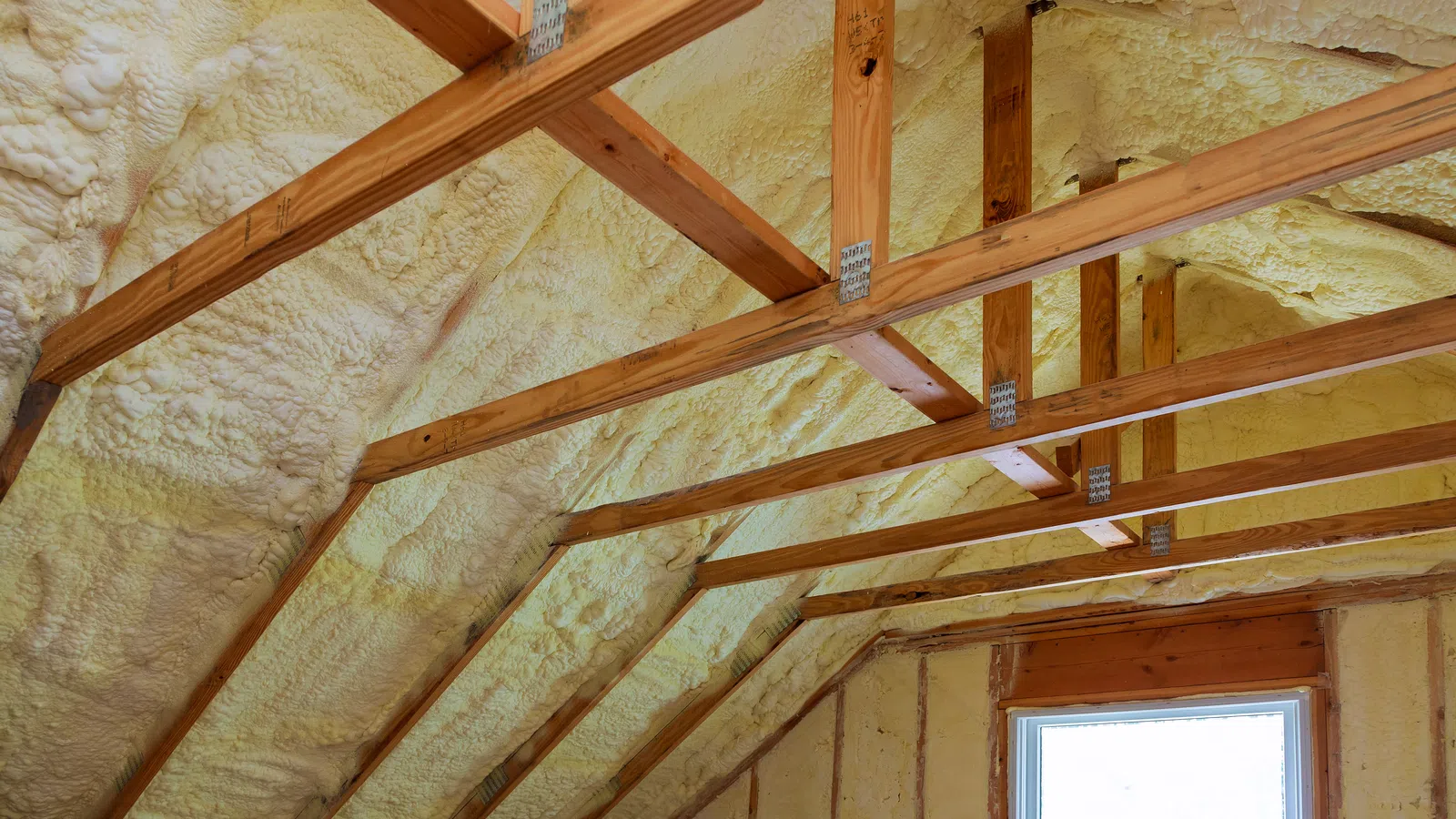
If your old attic insulation is dry, clean, and odor-free, you can usually leave it in place and add new insulation over it. Take it out when it is wet, contaminated by animals, or packed flat across large areas. A pebbly gray-brown or silver-gold fill may be vermiculite, and the EPA says not to disturb it.
Older homes around Bowling Green collect attic layers the way some families collect furniture. The original builder left a little. A later owner added a few rolls. Someone else blew in a bag or two over the top. Decades on, nobody is quite sure what is up there.
That is especially true in farmhouses around Russellville, Franklin, KY, and Morgantown, and in the older neighborhoods of Bowling Green, Glasgow, and Owensboro, where houses have changed hands many times.
What do older Bowling Green attics usually look like?
A few patterns come up again and again in this part of Kentucky:
- Plank or plywood floors over the joists. Farmhouse attics were often floored for storage. Whatever insulation sits under those boards is limited to the depth of the joists, and nobody has seen it in years.
- Batts in every direction. Rolls laid between the joists, then more rolls laid across them, sometimes with gaps where they did not quite meet.
- Loose fill of several kinds. Gray rock wool, newer cellulose, or blown fiberglass, sometimes all in the same attic.
- Bare spots at the eaves. The hardest place to reach, and often the thinnest.
- Old wiring. In the oldest homes, you may see wiring on porcelain knobs and tubes running across the joists.
When does it make sense to leave old insulation and add more?
When the existing material is dry, clean, and evenly spread, it still has value. There is no reason to pay to remove something that is doing part of the job.
In that case, the right move is usually to seal the main air leaks, level any low spots, and add new insulation over the top. Kentucky is in climate zone 4A, where ENERGY STAR recommends R-49 when adding to an attic that already has 3 to 4 inches, and R-60 for an attic with none.
When should old insulation come out?
Removal earns its cost when the old material is causing problems or hiding them. The usual reasons:
- Water damage. Insulation soaked by an old roof leak or a bath fan that vented into the attic stays flattened and can hold moisture against the wood.
- Animal contamination. Droppings and nesting material should come out once a pest professional has cleared the attic and closed the openings.
- Heavy compaction. Insulation crushed under years of stored boxes or foot traffic has lost much of its depth.
- A planned project. If you are reroofing, rewiring, or remodeling, it may make sense to remove the old layer and start fresh with a sealed attic floor.
What if you find vermiculite?
The EPA describes vermiculite as a pebble-like, pour-in product that is usually gray-brown or silver-gold. The agency notes that a mine in Libby, Montana supplied more than 70 percent of the vermiculite sold in the United States from 1919 to 1990, and it advises homeowners to assume vermiculite insulation may contain asbestos.
The agency's guidance for homeowners is to leave it undisturbed, not to store items in that attic, to keep trips up there few and short, and not to try removing it yourself. If it must come out, hire a trained asbestos professional. Do not let anyone sweep, vacuum, or add insulation over it until you know what you are dealing with.
What should you do about old wiring in the attic?
If you see wiring running on porcelain knobs and through porcelain tubes, often called knob and tube, have a licensed electrician look at it before any insulation is added around it. That older style of wiring was designed to shed heat into open air, and burying it in insulation can be a problem.
The same goes for any wiring that looks damaged, spliced with tape, or chewed. Fix the electrical issues first, then insulate.
What about the floored attic?
A floored attic is useful for storage, but it limits how much insulation can fit underneath. If you want both storage and a well insulated ceiling, you have a few options: raise the storage floor on taller supports, keep a smaller floored area near the hatch and insulate the rest of the attic fully, or move storage elsewhere.
Before deciding, someone needs to see what is under those boards. Old flooring sometimes hides very little insulation, or none at all.
If the boards come up, expect to find more than insulation. Old attics often hold wiring run across the joists, debris left behind by past roofers, and gaps where chimneys or plumbing pass through the ceiling. Those openings are worth sealing while the floor is open, because you may not get easy access again for years. Put the boards back only after the air sealing and new insulation are in, and leave a clear path to the hatch so the next person can check the attic without crushing the new layer.
Does the attic hatch or pull-down stair need attention too?
Almost always. The opening you use to get into the attic is often the single biggest hole in the ceiling, and it is easy to overlook because you only open it once or twice a year.
A plain plywood hatch in a closet ceiling usually has no insulation on top and no seal around the edge. A pull-down stair is worse, with gaps around the whole frame and a thin door. Warm air pours up through both all winter.
The fix is simple: weatherstrip the edges so the hatch or stair closes against a seal, and add an insulated cover or a layer of rigid insulation on the attic side. A homeowner can handle a basic hatch. A pull-down stair cover takes a little more care to fit so the stair still opens and closes.
Whatever you decide about the old insulation, fix the hatch at the same time. Otherwise the new layer is working around a hole.
Leave It, Top It Off, or Take It Out: Side by Side
- Leave it alone: Right only when the attic already meets the recommended depth and the layer is clean and even. Rare in older homes.
- Top it off: Right when the old layer is dry, clean, and not vermiculite. Seal the main air leaks first, then add new insulation to reach the recommended level.
- Remove and start over: Right when the old layer is wet, soiled, heavily compacted, or part of a bigger project. It costs more but gives you a clean, sealed attic floor.
- Do not touch: Right for vermiculite, per EPA guidance, until a trained professional has advised you.
Takeaway: most clean, dry attics only need sealing and a top-off. Save removal for insulation that is damaged, and treat vermiculite as its own case.
What does an attic inspection tell you?
A good inspection looks past the hatch. You learn how deep the insulation is across the whole attic, what materials are up there, whether anything is wet or damaged, where air is leaking from the rooms below, and whether there is wiring or flooring that changes the plan.
Photos help. Most homeowners have never seen their whole attic, and pictures make the recommendation easy to follow.
Ready to find out what is really up there?
An attic that has collected decades of layers deserves a clear look before the coldest part of winter. Request a free attic insulation inspection from USA Insulation of Bowling Green and find out whether a top-off or a fresh start makes more sense for your home.