
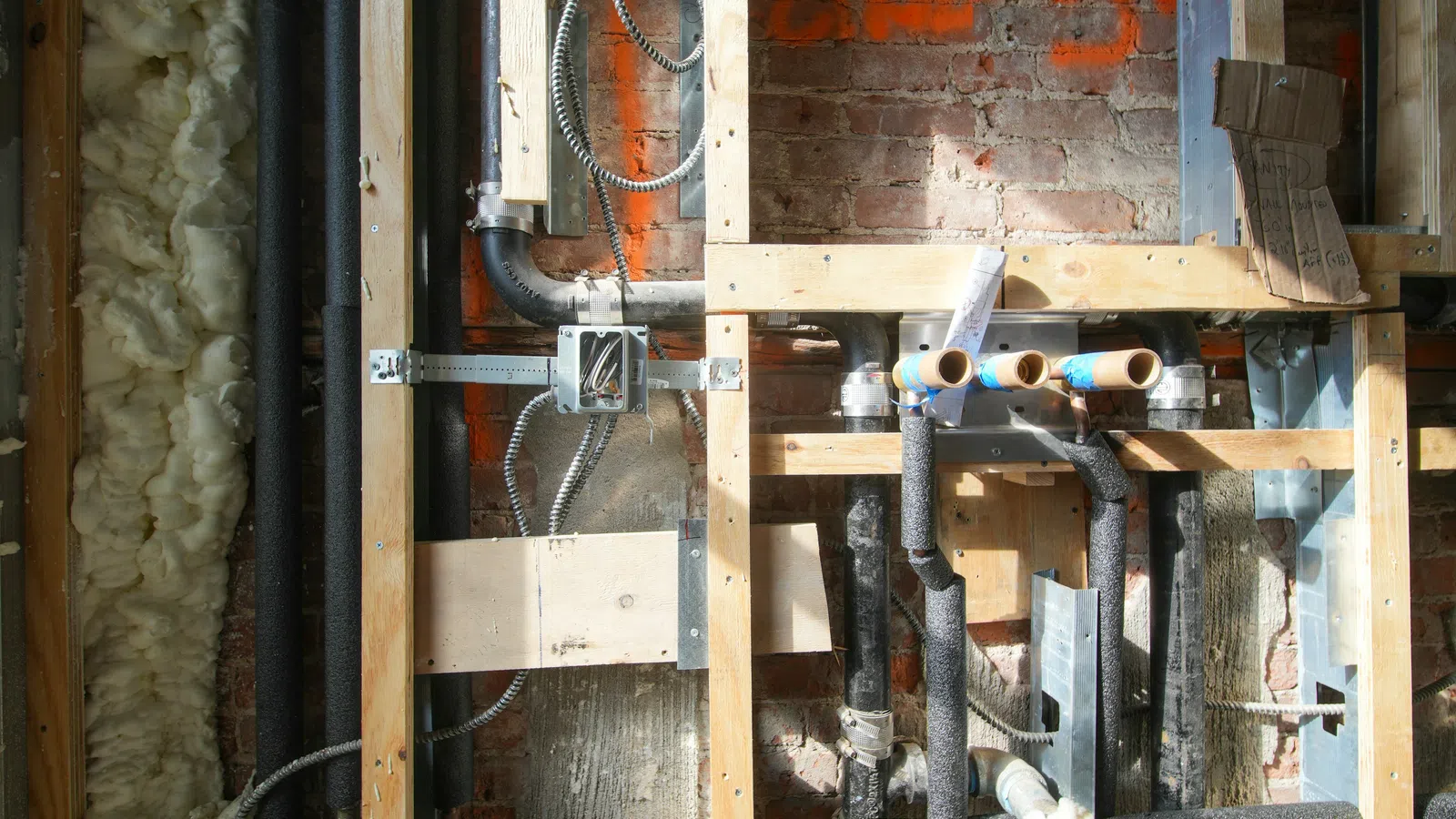
In most Bowling Green homes, pipes freeze first in the crawl space, inside north or west facing exterior walls, and along unheated garages or porches. Insulation and air sealing help by keeping cold air off those lines and holding household heat near them. They reduce the risk, but a hard freeze still calls for simple precautions.
Southern Kentucky gets enough mild winter days that a hard freeze can feel like a surprise. Then a cold front drops through, the wind picks up across open ground, and the one line under the kitchen sink that always gives you trouble stops running.
That story plays out in every kind of house around here. Brick ranches in Bowling Green and Franklin, KY, older farmhouses outside Russellville and Morgantown, and homes on open lots near Glasgow and Auburn each have their own soft spots.
Why do pipes freeze on some cold nights and not others?
Temperature is only part of it. Wind and time matter just as much.
A single night that dips below freezing rarely does damage in a house that stays heated. Trouble usually comes when the cold holds for days, or when strong wind pushes frigid air into the crawl space and through gaps in the walls. Moving air strips heat away from a water line much faster than still air does.
That is why the pipes that freeze tend to be on the side of the house that faces the wind. In much of the region, winter cold fronts arrive from the north and west, and a house standing in an open field takes the full force.
Where are the weak spots in a typical Bowling Green home?
Walk your house with these places in mind:
- The crawl space. Many ranches and older homes in the area sit on vented crawl spaces, with supply lines hanging from the floor framing. Air moves freely through the vents, and the pipes have little protection.
- Kitchen and bath walls that face outside. If those cavities are hollow, the pipes inside them are separated from winter air by little more than brick or siding and sheathing.
- Additions and enclosed porches. A laundry room or bath added to a farmhouse decades ago may sit over a separate, colder foundation.
- Garage walls and ceilings. Lines that run through an attached garage, or feed a room above it, are only as warm as the garage.
- Hose bibs. The section of pipe just inside the wall behind an outdoor faucet is a classic first casualty.
What about homes on a well?
Plenty of homes in Warren, Logan, Simpson, and Butler counties draw water from a well. That adds a few more places to watch: the pump, the pressure tank, and the line between the well and the house.
If any of those sit in a pump house, a shed, or an unheated corner of a garage or basement, they can freeze before anything inside the house does. When that happens, you lose water to every faucet at once. A plumber or well service professional can tell you how your system is protected and whether it needs more.
Insulation in the house will not help an outbuilding, so treat the well equipment as its own project.
If you are not sure where your well line enters the house, walk the outside of the foundation on a mild day and look for the spot where a pipe comes through the wall or up into the crawl space. That entry point is often a gap that lets cold air in right where the water arrives. Note it, and mention it when you have the house inspected, so the opening around it can be sealed along with the other leaks.
How does insulation help protect pipes?
Insulation keeps the heat from your living space from escaping as fast. A pipe surrounded by a warm, insulated wall stays closer to room temperature for hours longer than a pipe in a cold, empty one.
Placement matters, though. The pipe needs to be on the warm side of the insulation, with the insulation between the pipe and the outdoors. Packing insulation between a pipe and the heated room can do the opposite of what you want, because it blocks the warmth that keeps the line from freezing.
In a hollow exterior wall, injection foam fills the cavity and stops the drafts that move through it, which makes the whole wall warmer during a cold spell. In the attic, a full, even layer keeps more heat in the house overall. Both help the plumbing indirectly by keeping the whole building warmer when it counts.
Why is air sealing just as important?
Cold air needs a way in before it can freeze a pipe, and most houses offer plenty of them.
The worst offenders are the holes where pipes and drains pass through the floor from the crawl space, the gap between the top of the foundation and the wood framing, and the openings behind sink cabinets. In older farmhouses you may also find spots where framing was cut for plumbing and never patched.
Closing those openings does double duty. Pipes stay warmer, and so do your floors and the rooms above.
What can insulation not do for your plumbing?
It cannot add heat. During a long power outage in bitter cold, even a well insulated pipe will eventually cool off.
It also cannot protect pipes that sit outside the insulated part of the house. Lines in an open crawl space need their own protection, such as foam pipe sleeves or a heat cable installed according to the maker's instructions. A plumber can advise on the right choice.
Think of insulation and air sealing as improving your odds. They buy you time and margin, and they work best combined with the habits on the checklist below.
A Cold Snap Checklist for Bowling Green Homeowners
- I know where my main water shutoff is. If a pipe splits, you will want to stop the water within minutes, not hunt for the valve.
- The hoses are off the outdoor faucets. A connected hose traps water in the spigot, where it freezes and can split the pipe behind it.
- The garage door stays closed. An open door turns the garage into an outdoor space for any line that runs through it.
- Sink cabinets on outside walls are open. Room air can only warm those pipes if it can reach them.
- A faucet is dripping on the coldest nights. The American Red Cross recommends a slow drip of cold water from faucets fed by exposed pipes.
- The thermostat stays put overnight. A steady setting during a cold spell keeps walls and floors from cooling off as deeply.
- The well equipment is checked. Make sure the pump house or tank area is protected before the deepest cold arrives.
- I know who to call. Keep a licensed plumber's name handy, and never thaw a pipe with an open flame.
When should you deal with cold walls and drafty floors?
The best time is before the first long freeze of the season. Late fall leaves room to find out which walls are empty and where cold air is getting in, then get the work done while the weather is still kind.
An insulation inspection gives you that picture. You see what is in your walls and attic, where the leaks are, and what would make the biggest difference for comfort and for the pipes that run through the house.
Want to know where the cold is getting in?
A few hours of looking now beats a burst line in the middle of January. Request a free insulation inspection from USA Insulation of Bowling Green and get ahead of the hard freezes this winter.