
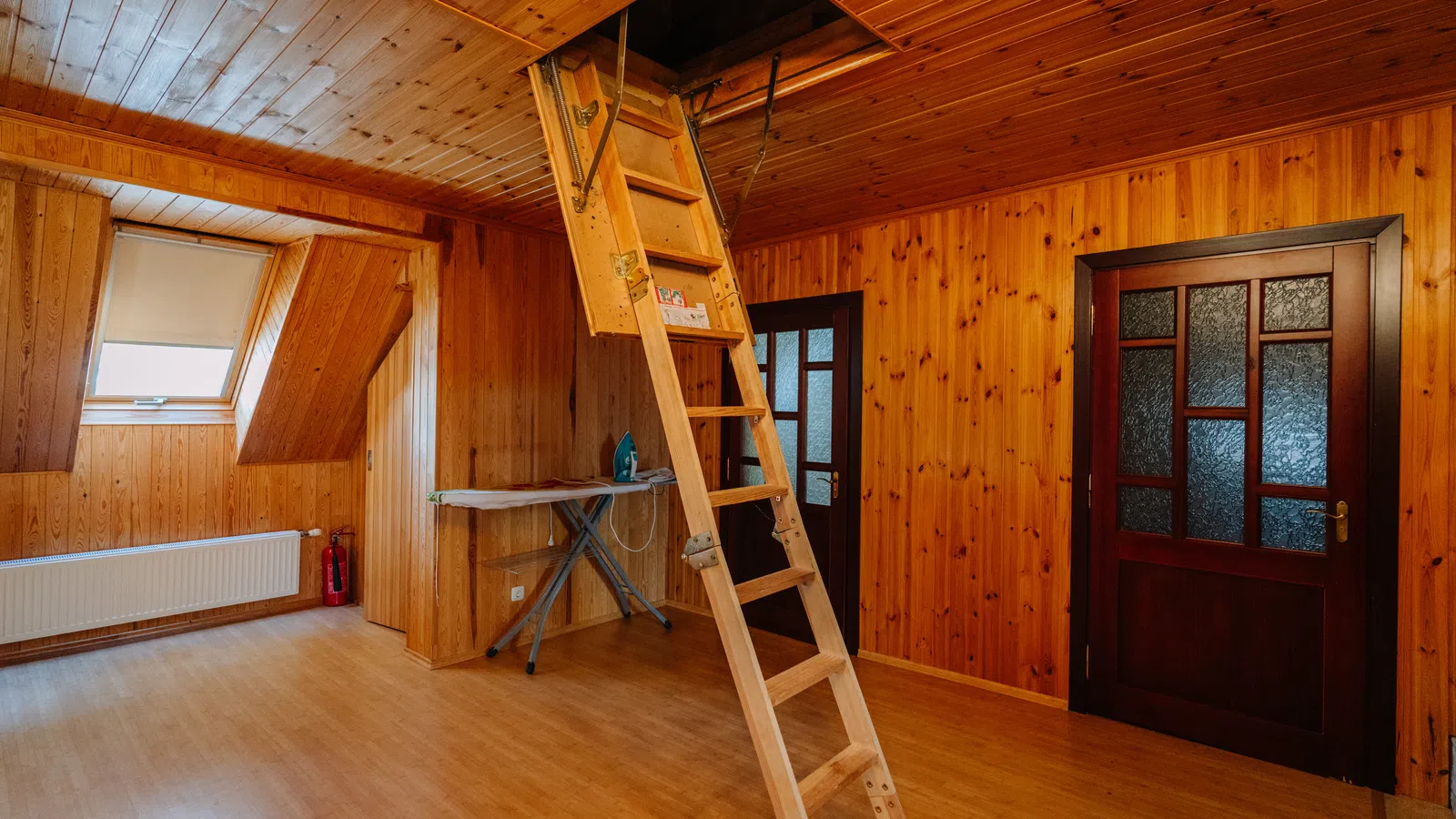
A home can have plenty of insulation across the attic floor and still feel uncomfortable if one small area is left exposed.
For many Nashville homeowners, that weak point is the attic access.
Pull-down stairs, ceiling hatches, and attic doors create a direct break between conditioned living space and an attic that can become extremely hot in summer and much colder in winter. When the access point is not insulated or sealed well, air can move through gaps around the frame, ladder opening, trim, and panel.
That can leave nearby hallways, bedrooms, closets, and upstairs spaces feeling different from the rest of the home.
At USA Insulation, we look at the entire thermal boundary of the home, including the places that are easy to overlook.
Why Attic Access Points Are Different From the Rest of the Ceiling
Most attic floors are covered with insulation across a broad, continuous surface.
An attic hatch or pull-down stair interrupts that layer.
Instead of several inches of insulation separating the living area from the attic, there may be only a thin wood panel, folding stair assembly, or lightweight cover.
Even when the surrounding attic insulation is performing well, the access opening can act like a weak spot.
The difference becomes more noticeable during Nashville's seasonal temperature swings because the attic and the living space can be separated by a very large temperature difference.
Small Gaps Can Create Noticeable Air Movement
Attic access problems are not only about insulation depth.
Air leakage matters too.
Pull-down stair frames and access panels often have small gaps around:
- The Perimeter Of The Opening
- Hinges And Hardware
- Trim
- Ladder Assemblies
- Latches
- Warped Panels
- Weatherstripping
- Framing Joints
Those openings may not look significant, but air can move through them whenever pressure changes inside the home.
Warm air naturally rises, and mechanical systems can also create pressure differences from one room to another. That can encourage conditioned air to escape into the attic or attic air to enter the living space.
Why the Area Around the Attic Door May Feel Warmer in Summer
Nashville summers can make attic spaces intensely hot.
When an attic access panel has little insulation above it, heat can move through that surface more quickly than through the insulated ceiling around it.
Homeowners may notice:
- A Warm Hallway Below The Attic Stairs
- An Upstairs Bedroom That Is Harder To Cool
- A Closet Near The Access That Feels Stuffier
- Noticeable Heat Around The Ceiling Opening
- Longer HVAC Run Times During Hot Afternoons
The problem may feel like an air-conditioning issue even though the attic access is contributing to the comfort difference.
Winter Can Reveal the Same Weak Point
The same opening can create the opposite problem during colder weather.
A poorly insulated attic hatch may feel cold to the touch.
Cool air can leak around the frame, and warm indoor air can escape upward.
Homeowners may notice a chilly hallway, cold drafts near the ceiling opening, or a bedroom that cools faster than nearby rooms.
Because Nashville winters include frequent temperature changes, these comfort problems can appear and disappear depending on the weather.
That makes them easy to overlook.
Pull-Down Stairs Can Be Especially Difficult to Insulate
A simple attic hatch can often be covered more easily because the panel stays relatively flat.
Pull-down stairs are more complicated.
The folding ladder, moving joints, hinges, and frame all need clearance to operate.
Insulation cannot simply be packed around moving parts.
A successful approach needs to preserve safe access while improving the thermal barrier above and around the opening.
That is why the solution often involves treating the access assembly as its own part of the attic system rather than trying to handle it exactly like the rest of the attic floor.
Attic Access Can Affect More Than One Room
The discomfort from an attic opening may not stay directly below it.
Air movement in the upper level of a home can affect nearby rooms.
For example, an attic stair in an upstairs hallway may contribute to temperature differences in bedrooms on either side.
A hatch inside a closet may make that closet feel hot or cold, which can then influence the adjoining bedroom.
Homes with open stairways can also allow temperature differences from the upper floor to be felt downstairs.
That is one reason homeowners sometimes struggle to identify where the comfort issue actually begins.
Signs Your Attic Access May Need Attention
An attic access point may be worth evaluating if you notice:
- Light Visible Around The Hatch
- Missing Or Damaged Weatherstripping
- A Panel That Does Not Sit Flat
- A Noticeable Draft
- A Hot Or Cold Ceiling Area Around The
Opening
- A Stair Assembly With No Insulated Cover
- Dust Marks Around The Frame
- Condensation Or Moisture Staining
- One Nearby Room That Is Consistently Hard To Condition
None of these signs automatically proves that the attic access is the only problem.
They do show that the opening deserves a closer look as part of the home's insulation and air-sealing system.
Why Simply Adding More Attic Insulation May Not Solve It
Homeowners sometimes assume that if the attic feels under-insulated, adding more material across the attic floor will fix every comfort problem.
That is not always the case.
If the attic hatch remains uninsulated or unsealed, the thermal barrier is still interrupted.
It is similar to wearing a heavy winter coat while leaving the zipper open.
The insulation around the opening may perform well, but conditioned air can still move through the weak point.
That is why attic work should consider continuity, not only total insulation depth.
The Connection Between Attic Access and Air Sealing
Insulation slows heat transfer.
Air sealing reduces uncontrolled airflow.
Attic access points often need both.
Weatherstripping, properly fitted covers, and sealing around appropriate stationary gaps can help reduce air movement.
The exact approach depends on the type of access, framing, ladder assembly, existing insulation, and how often the attic is used.
A rarely used hatch may have different needs than pull-down stairs that homeowners open every week.
What Nashville Homeowners Should Check Before Fall and Winter
Late summer and early fall are good times to look for weak points before colder weather arrives.
Homeowners can visually inspect the attic access and ask:
- Does The Hatch Close Completely?
- Is Weatherstripping Present And Intact?
- Is There Any Insulation Above The Panel?
- Is The Pull-Down Stair Assembly Covered?
- Are There Gaps Around The Frame?
- Does The Area Feel Noticeably Hotter Than
The Ceiling Around It?
- Is There Dust Or Staining That Suggests Air Movement?
Avoid blocking safe access or packing insulation against components that need clearance.
If the opening is difficult to evaluate, a professional insulation inspection can help identify how it fits into the rest of the home's thermal boundary.
A Small Opening Can Have a Big Comfort Impact
Attic access doors do not take up much square footage, but they can create a noticeable weak spot in an otherwise insulated ceiling.
For Nashville homeowners dealing with upstairs drafts, uneven temperatures, or a hallway that never seems comfortable, the attic access is worth checking.
USA Insulation can evaluate the attic, access points, air leakage, and surrounding insulation to help identify where comfort is being lost.
Contact us to
schedule an insulation inspection for your Nashville home.