Injection foam insulation in Nashville is priced by the
amount of exterior wall being filled, so no single number fits every house.
Your price depends on wall area, the number of stories, what the outside of the
home is made of, and how easy the walls are to reach. An assessment helps
establish a project-specific estimate.
That can feel like a dodge when you are trying to plan a
budget, so this guide explains what moves the number up or down. Once you know
the factors, you can look at your own house and have a fair idea of where it
will land compared with the house next door.
The range is wide across
Middle Tennessee. A two-story home in Brentwood or Franklin, TN has a lot more
exterior wall than a one-story ranch in Madison or Antioch, and a brick house
in Hendersonville is reached differently than a sided house in Smyrna.
What are you paying for with injection foam?
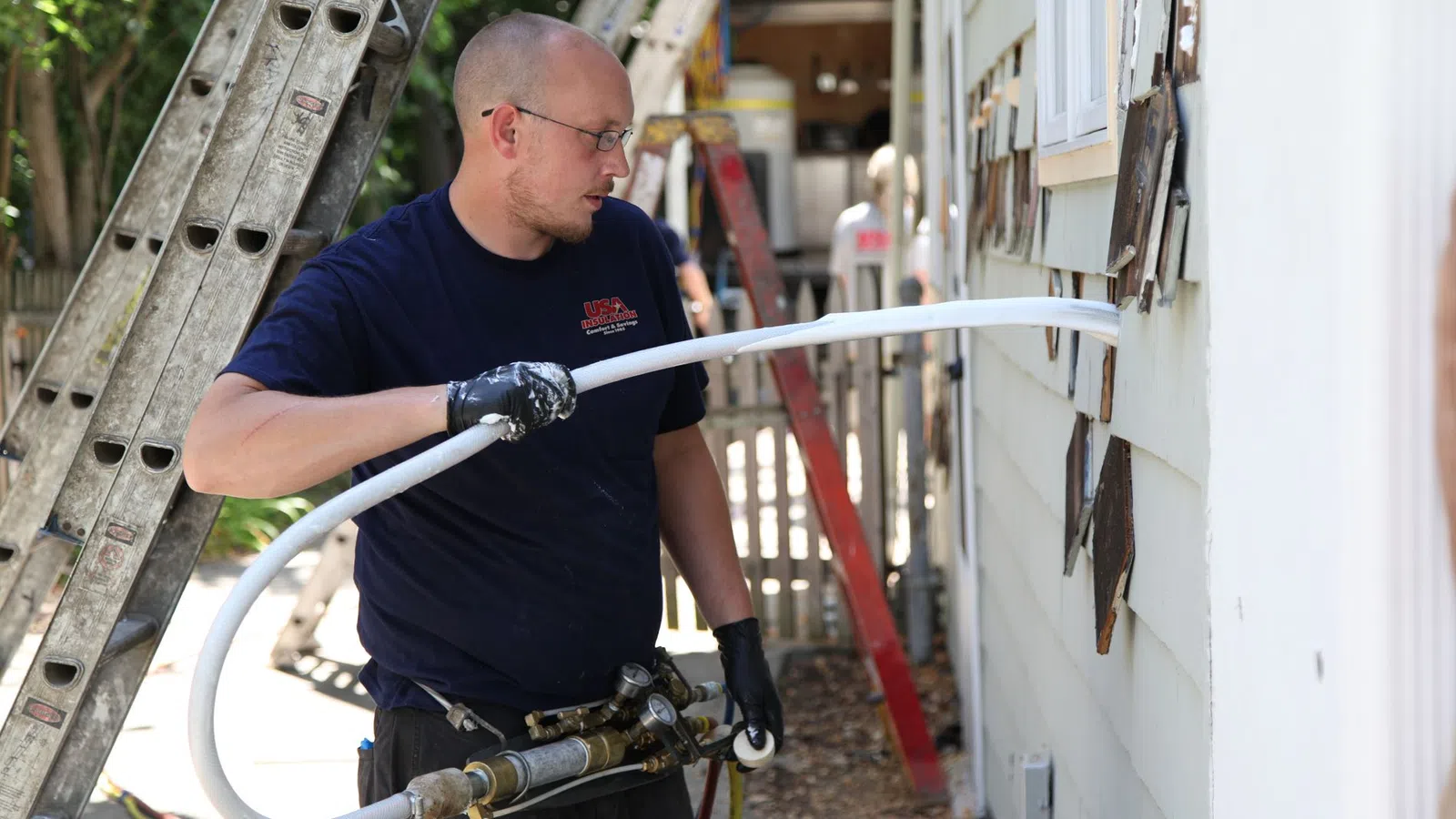
You are paying to have every exterior wall cavity in the
house filled without opening the walls. That is a different job from rolling
insulation into an open attic.
The price covers a few things:
●
Getting to each cavity. Walls are framed
with a stud every 16 inches or so, and each space between studs is its own
pocket. The crew has to reach every one, including the short spaces above and
below windows.
●
The foam itself. The more wall you have,
the more material it takes.
●
Closing up. Every access hole is plugged
and patched, and any siding that was lifted goes back on.
●
Setup and cleanup. Protecting
landscaping, running hoses, and leaving the site tidy are part of the day.
What you are not paying for
is demolition. The drywall or plaster inside your home stays where it is, so
there is no rebuilding or repainting of whole rooms afterward.
What makes the price go up or down?
Six things account for most of the difference between
one Nashville quote and another.
1.
Exterior wall area. This is the biggest
factor. It is measured in square feet of wall, and floor area alone will not
tell you what it is.
2.
Number of stories. A second story means
more wall and more ladder or lift work to reach it.
3.
Exterior material. Vinyl, wood, fiber
cement, brick, and stone are each reached and closed up in a different way.
4.
What is in the walls now. Empty cavities
fill differently than walls with thin, sagging batts from decades ago.
5.
Obstacles. Decks, porches, sunrooms,
tight side yards, and heavy landscaping all add setup time.
6.
How much of the house you insulate. A
full house costs more than the two coldest walls, though the full job usually
delivers more comfort for each square foot treated.
Why can two Nashville homes the same size get different prices?
Because square footage of living space is the wrong
measure. What matters is how much of the home's outer shell is wall.
Picture two homes with the same living area. One is a
simple two-story box in Mount Juliet. The other is a long, single-story ranch
in Donelson with a bump-out and an attached garage. They have different amounts
of exterior wall, different heights, and different numbers of windows and doors
breaking up the cavities.
Add in the exterior. A home
with brick on the front and siding on the other three sides is really two kinds
of work on one house. That is why an honest price cannot be given sight unseen,
and why a number quoted over the phone by any contractor is only a guess.
Do you have to insulate the whole house, or can you
start with a few walls?
You can start with part of the house. Some homeowners
begin with the north and west walls, the wall behind a cold bedroom, or the
story that gives them the most trouble.
There are two things to weigh. First, each visit carries
its own setup, so doing the house in pieces usually costs more in total than
doing it once. Second, heat finds the weakest spot. If three walls are filled
and one is empty, the empty one will keep leaking.
A good estimator will price
it both ways if you ask, so you can see the difference and decide.
How should you compare two wall insulation quotes?
Line the quotes up side by side and check that they
describe the same job. The total at the bottom means little until you know what
each one covers.
●
Wall area covered. Each quote should
state the square footage of wall being filled and which walls are included.
●
Product. Get the name of the product and
its R-value per inch in writing.
●
Access method. Ask where the holes will
be drilled and how they will be closed.
●
Finish work. Find out who patches, who
touches up paint or mortar, and what the wall will look like afterward.
●
How the fill is checked. Ask how the crew
confirms each cavity is full.
●
Cleanup and timeline. Both should be
spelled out.
●
Documentation. Ask what records you will
receive when the job is done, such as product specs and the areas treated.
If one quote is far below
the others, the usual reason is that it covers less wall. Check the
measurements before you assume you found a bargain.
How should Nashville homeowners plan an insulation
budget?
There may be, and it takes a few minutes to check.
When setting a budget, focus on the project scope, wall
access, and the written estimate. Do not assume a discount or incentive will
apply without confirming the current terms independently.
The federal tax credit that used to apply to insulation
is a different story. According to the IRS, that credit is not available for
improvements placed in service after December 31, 2025, so do not count on it
for work done now.
A written estimate can help
you plan the work around your budget.
Is injection foam worth it in an older Nashville
home?
For many older homes, the walls are the largest
untouched opportunity. Homes built before about 1980 often went up with little
or no insulation in the exterior walls, and Nashville has many of them, from
East Nashville and Inglewood to the ranch neighborhoods of Madison and
Hermitage.
USA Insulation estimates that about 35 percent of a
typical home's energy loss goes through the walls, compared with about 25
percent through the attic. Attics get most of the attention because they are
easy to reach, while the walls sit empty for decades.
What you get for the money
is comfort you can feel: walls that are not cold to the touch in January, fewer
drafts at outlets and baseboards, rooms that hold their temperature, and a
heating and cooling system that does not have to run as hard. How much your
bills change depends on your house, your equipment, and how you use it, so be
wary of anyone who promises a specific number.
How do you get an exact price?
Have the house measured. An inspection looks at the
exterior walls, checks what is inside them, notes the siding or brick, and
accounts for anything that makes access harder.
From there you get a written
price for your home, based on its actual wall area. Ask questions, compare it
with other quotes using the checklist above, and take the time you need.
Quick Answers for Nashville Homeowners
Is there a price per square foot for injection foam?
Pricing is based on the square footage of exterior wall,
but the rate changes with height, exterior material, and access. That is why a
measured quote is the only reliable number.
Can I insulate only the coldest rooms?
Yes. You can treat selected walls, though doing the
whole house in one visit usually costs less overall than doing it in stages.
What should a wall-insulation estimate include?
Review the written quote closely and ask which surfaces
and preparation steps are included.
Does a brick home cost more to insulate?
It can be priced differently because brick is reached
and patched in its own way. The inspection will show what your home needs.
What happens during a home assessment?
The team can review the wall
conditions and explain what affects your home's project scope and estimate.
Want the real number for your house?
The most useful estimate reflects your home's actual
conditions. Contact USA Insulation of Nashville to discuss your insulation
project.