
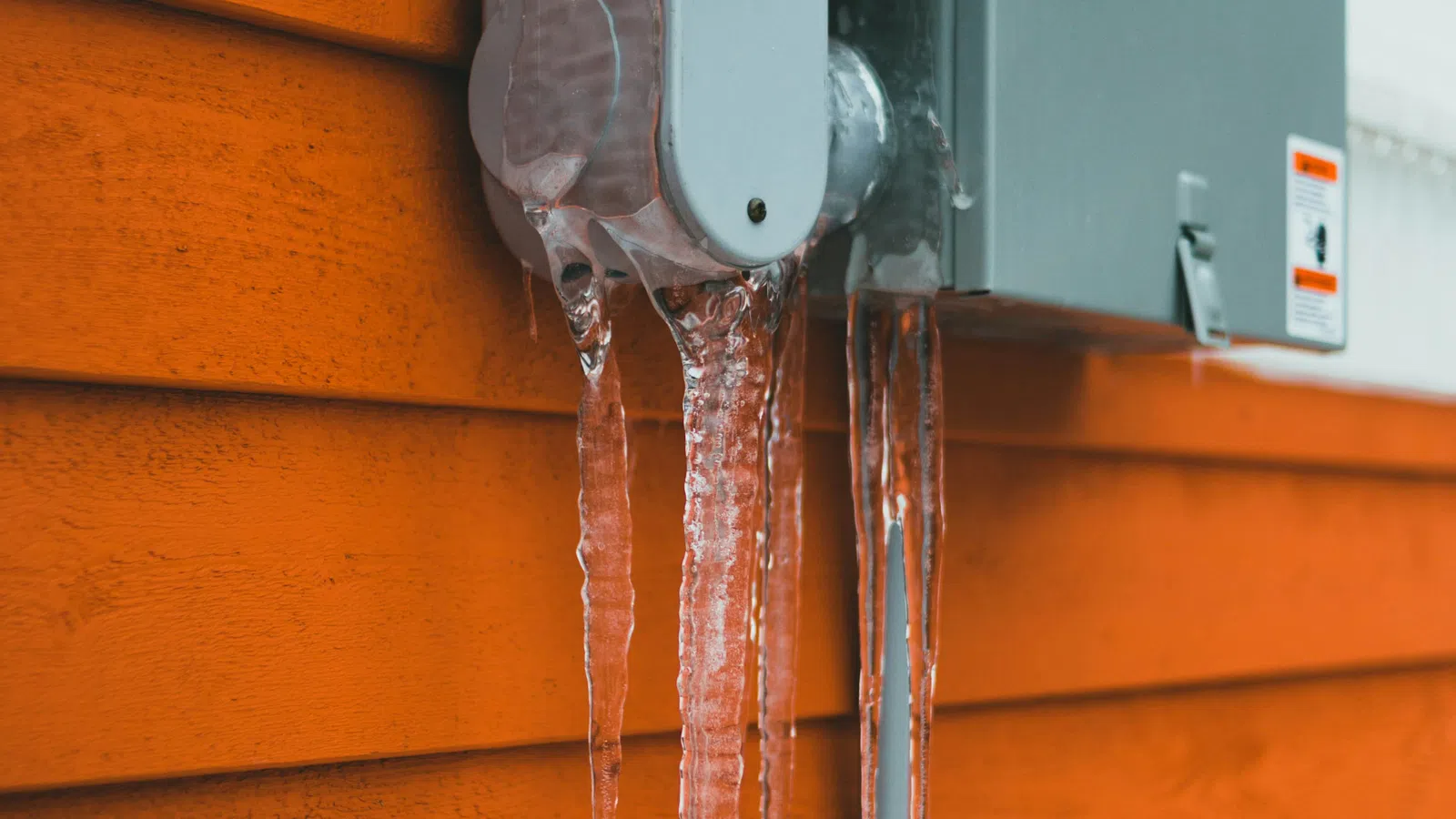
Pipes freeze first where they run through the coldest, leakiest parts of a house: crawl spaces, outside walls, garages, and cabinets on exterior walls. Insulation and air sealing lower the risk by keeping cold air away from those lines, but they cannot rule out a freeze. The best protection pairs a tighter house with smart habits during a cold snap.
Nashville winters are mild most days, which is part of the problem. Many homes here were built for a climate that rarely stays below freezing for long, so plumbing ends up in spots that would never pass in a colder city. When an arctic front does settle over Middle Tennessee for a few days, those spots get tested all at once.
You see it in every part of the metro. A 1950s ranch in Madison or Donelson on a vented crawl space, a bungalow in East Nashville with a kitchen sink on an outside wall, and a newer two-story in Mount Juliet with a bathroom over the garage all have their own weak points.
Where do pipes freeze first in a Nashville house?
Water lines freeze where cold air reaches them, and household heat does not. In most homes around Nashville, that comes down to a short list:
- Crawl spaces. Supply lines often run along the floor joists just above the dirt, with vents to the outside. On a windy night, that space can get nearly as cold as the yard.
- Exterior walls. A kitchen or bathroom sink on an outside wall usually has its pipes inside that wall cavity. If the wall is empty or poorly insulated, the pipes sit only inches from outdoor air.
- Garages. Lines that pass through or along a garage wall, or that feed a bathroom over the garage, are exposed to an unheated space.
- Sink cabinets. A closed cabinet keeps room heat away from the pipes inside, which is why cold-snap advice always includes opening the doors.
- Outdoor spigots and the lines that feed them. The short run of pipe just inside the wall is often the first to go.
Why does a mild climate make freezing more likely, not less?
Because builders plan for the weather they expect. In places with long, hard winters, plumbing tends to stay inside the heated part of the house. In Middle Tennessee, it has long been common to run lines through crawl spaces and outside walls, since a hard freeze is not an everyday event.
Homeowners also tend to be less prepared. If you moved here from somewhere colder, you may know the drill. If you have lived through a run of easy winters, the forecast can catch you with the cabinet doors closed and the garage door open.
How does insulation lower the risk?
Insulation slows the flow of heat. When it sits between a pipe and the cold outdoors, the pipe stays closer to the temperature of the house for longer.
The key phrase is between the pipe and the cold. A pipe should stay on the warm side of the insulation. If insulation is packed between the pipe and the heated room, it can actually cut the pipe off from the warmth it needs. That is why it pays to have someone who understands wall assemblies look at how your plumbing runs before anything is added.
For exterior walls, filling empty cavities with injection foam raises the temperature of the whole wall during cold weather and blocks the drafts that move through hollow walls. The goal in a wall with plumbing is to keep the cold side of the cavity insulated, so the pipe gets more benefit from the heat inside the house.
Why do air leaks matter as much as insulation?
A pipe can survive cold still air far longer than cold moving air. Wind blowing through a gap in the rim of the house or a hole in the floor pulls heat out of a water line quickly.
The places to check are the openings where pipes, drains, and wires pass through the floor, the gaps at the top of the foundation, and the holes behind sink cabinets where lines enter the wall. Sealing those openings keeps cold air from reaching the pipe in the first place. It also keeps that air out of your rooms, which you notice as warmer floors.
Which Nashville homes are most at risk?
Every house is different, but a few patterns come up again and again across the area:
- Older ranches on crawl spaces in Madison, Donelson, Hermitage, and Antioch, especially where the crawl space vents stay open all year.
- Early twentieth-century homes in East Nashville, Inglewood, and Sylvan Park, where walls were built with no insulation and plumbing was added or rerouted over the decades.
- Additions and enclosed porches that were built over a slab or open framing and later given a laundry or half bath.
- Newer homes with rooms over the garage in Smyrna, La Vergne, Hendersonville, and Mount Juliet, where a supply line runs through the garage ceiling.
If one sink in your house is always the slowest to run warm in winter, or the cabinet under it feels cold when you open it, that line deserves a closer look.
What can insulation not do?
Insulation does not create heat. It only slows heat loss. If the power goes out for a long stretch during a hard freeze, an insulated pipe will still cool down eventually.
It also cannot protect a pipe that is outside the insulated part of the house, like a line in a vented crawl space with no protection at all. Those pipes need their own measures, such as pipe insulation sleeves or a heat cable installed according to the manufacturer's instructions, and that is a job for a plumber or handy homeowner, not an insulation crew.
So think of insulation and air sealing as lowering the odds and buying time. They make a freeze less likely and give you more margin when the forecast turns. They work best alongside the habits below.
First Steps When a Hard Freeze Is in the Forecast
- Find your main water shutoff now. Know where it is and make sure it turns. If a pipe bursts, every minute counts.
- Disconnect garden hoses. Shut off and drain outdoor spigots if your home has interior shutoffs for them.
- Close the garage door. Keep it shut, especially if water lines run through or along the garage.
- Open the cabinet doors. Open the doors under kitchen and bathroom sinks on outside walls so room heat can reach the pipes.
- Let the faucet drip. The American Red Cross recommends letting cold water drip from faucets served by exposed pipes, because moving water is harder to freeze.
- Keep the thermostat steady. Hold the same temperature day and night during a cold snap, and if you are traveling, leave the heat on rather than turning the system off.
- If a faucet only trickles, act early. Leave it open and warm the pipe gently with a hair dryer or a heating pad. Never use an open flame, and call a licensed plumber if you cannot find or thaw the frozen section.
When is the best time to fix the weak spots?
Before the first deep freeze, if you can. Late fall gives you time to find the cold walls and leaky openings, decide what to do about them, and get the work finished while the weather is still mild.
An insulation inspection is a practical place to start. It shows which exterior walls are empty, where the air leaks are, and how much insulation is in the attic. With that picture, you can plan the work that will make your house warmer this winter and help protect the plumbing that runs through it.
Ready to find the cold spots before the cold does?
A little attention in November can save you a soggy mess in January. Request a free insulation inspection from USA Insulation of Nashville and find out where your home is losing heat before the next hard freeze.