
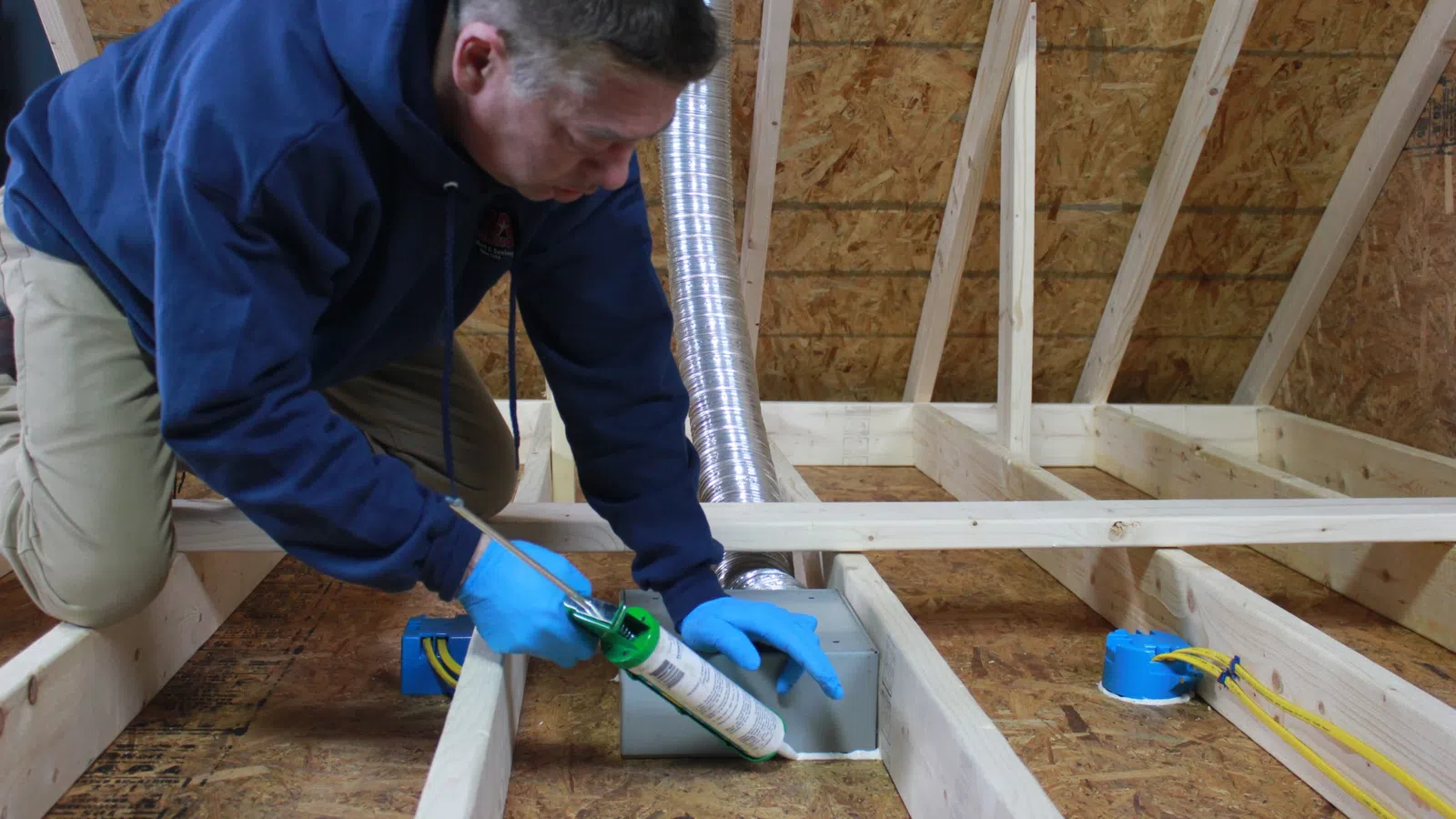
Air Sealing and Insulation: The One-Two Punch for Nashville Energy Bills
If your home still feels drafty after adding insulation, or your energy bills stay high no matter how carefully you use the thermostat, the problem may be air leakage.
Insulation is important, but insulation alone is not always enough. A home also needs air sealing to stop conditioned air from escaping and outdoor air from entering.
At USA Insulation of Nashville, we look at home comfort as a complete system. Your attic, walls, crawlspace, rim joists, outlets, duct chases, and ceiling penetrations all affect how much energy your home uses. When insulation and air sealing work together, your home can feel more comfortable and perform more efficiently.
For Nashville homeowners, this matters during both summer and winter. Hot, humid air can leak in during the summer. Heated indoor air can escape during the winter. Either way, your HVAC system works harder and your energy bills climb.
The Difference Between Insulation and Air Sealing
Insulation and air sealing are related, but they are not the same thing.
Insulation slows heat transfer. It helps keep heat from moving through walls, ceilings, floors, and attic spaces.
Air sealing stops air movement. It closes the cracks, gaps, and openings that allow air to leak in and out of the home.
Think of insulation as a jacket and air sealing as zipping the jacket. The insulation helps, but if air is still rushing through open gaps, your home is not as protected as it should be.
A home can have plenty of insulation and still waste energy if it has major air leaks. On the other hand, air sealing without enough insulation may not provide the full comfort improvement homeowners expect.
The best results usually come from doing both.
Why Air Leaks Are Such a Problem in Nashville Homes
Nashville homes deal with long stretches of heat and humidity. When outdoor air leaks into your home, it brings heat and moisture with it. Your air conditioner then has to cool the air and remove humidity.
That can lead to:
- Higher cooling bills
- Longer HVAC run times
- Uneven room temperatures
- Sticky indoor air
- More dust and pollen indoors
- Drafty rooms in winter
Air leakage is especially common in older homes, but newer homes can have issues too. We often see leaks around knee walls, cantilevers, bonus rooms, attic access points, and floor systems.
In Brentwood new builds, for example, knee-wall and cantilever areas can become comfort problems if they are not sealed and insulated correctly. A room may look finished from the inside, but hidden gaps behind the walls or floors can allow air to move freely.
Common Leak Points in a Home
Air leaks are often hidden in places homeowners do not think to check. A small gap may not seem like much, but all the small leaks throughout a home can add up to a major energy problem.
Common leak points include:
- Attic hatches
- Recessed can lights
- Plumbing penetrations
- Electrical wiring holes
- Rim joists
- Crawlspace openings
- Basement gaps
- Knee walls
- Cantilevered floors
- Fireplace surrounds
- Exterior wall penetrations
- Duct chases
- Gaps around outlets and switches
- Top plates in the attic
Many of these gaps are hidden behind walls, above ceilings, or below floors. That is why a professional home energy assessment can be helpful. We know where to look and how to identify the areas that are likely wasting energy.
How USA Insulation's Search and Seal Process Works
Our Search and Seal process is designed to find and address the hidden gaps that make your home harder to heat and cool.
During an inspection, we look at the areas where air leakage is most likely to happen. We pay attention to comfort complaints, home age, attic conditions, wall insulation, crawlspace or basement access, and the areas where temperature differences are most noticeable.
Once we identify problem areas, we can recommend air sealing solutions that work with your insulation plan.
Depending on the home, air sealing may include sealing gaps around attic penetrations, rim joists, access points, plumbing or wiring openings, and other areas where conditioned air escapes.
The goal is simple: keep the air you are paying to heat and cool inside the home.
Why Air Sealing and Insulation Work Better Together
Insulation and air sealing are strongest when they are installed as part of the same comfort strategy.
If your attic has enough insulation but air is leaking around can lights, attic access points, or top plates, your home can still lose conditioned air. If your walls are insulated but gaps around outlets and penetrations allow air movement, comfort problems may continue.
When we pair air sealing with insulation, homeowners often see a stronger improvement because we are addressing both heat transfer and air movement.
Together, insulation and air sealing can help:
- Reduce energy waste
- Improve room-to-room comfort
- Lower HVAC strain
- Reduce drafts
- Help control humidity
- Make upstairs rooms more comfortable
- Improve year-round performance
That is why air sealing is such an important part of a complete insulation upgrade.
Why This Matters for Nashville Energy Bills
Nashville homeowners often feel the cost of air leakage during the summer. Your air conditioner runs longer because hot, humid air keeps finding its way inside. The home may cool down temporarily, but it warms back up quickly.
In winter, the opposite happens. Heated air escapes, cold air enters, and certain rooms feel drafty no matter where the thermostat is set.
When your home leaks air, you are paying to heat and cool air that does not stay in the house.
Air sealing helps reduce that waste. When paired with attic insulation, injection wall foam, or other insulation upgrades, it can help your home hold comfort longer.
When to Schedule a Free Energy Assessment
You may benefit from an insulation and air sealing inspection if:
- Your energy bills are high
- Certain rooms feel drafty
- The upstairs is hotter than downstairs
- Your HVAC system runs constantly
- Your home feels humid in summer
- You notice dust or pollen around outlets
- Your attic insulation looks thin or uneven
- Your home was built before 1980
- You have bonus rooms, knee walls, or cantilevered areas
The best time to schedule an assessment is before the most extreme weather arrives. That gives you time to make improvements before your HVAC system is under the most pressure.
Schedule a Free Insulation and Air Sealing Inspection in Nashville
If your home feels drafty, uncomfortable, or expensive to heat and cool, USA Insulation of Nashville can help.
We inspect your home, identify insulation and air leakage issues, and recommend the upgrades that make the most sense. Our team helps homeowners with air sealing, attic insulation, injection wall foam, and full-home comfort solutions.
Call 615-263-3555 to schedule your free inspection.
USA Insulation of Nashville
309 Plus Park Blvd Suite 255
Nashville, TN 37217
We serve Nashville, Brentwood, Franklin, TN, Murfreesboro, Smyrna, La Vergne, Hendersonville, Gallatin, Goodlettsville, Hermitage, Lebanon, Madison, Mount Juliet, Antioch, Springfield, and the surrounding region.