
How long does it take to install injection foam insulation?
It depends on the size of your home and how many walls are being filled, and your written estimate should give the expected time on site. The day follows a set order: a walkthrough with the crew, siding removed or mortar joints drilled, foam injected into each wall cavity, holes plugged, siding reinstalled, then cleanup and a final walkthrough with you.
Once you have decided to insulate your walls, the next question is usually practical. What will the day actually be like? Do you need to take off work? Will there be people inside your house? Will it be loud? How messy will it get?
Here is install day for a typical Central Kentucky home, step by step, so you know exactly what to expect.
What should you do before the crew arrives?
Not much, and almost all of it is outside.
Walk around the house the day before and move anything sitting against the exterior walls: grills, patio furniture, planters, trash cans, bikes and hoses. The crew needs a clear path along each wall they are filling.
Make a note of anything you want them to be careful around, such as a garden bed, a wall-mounted light or a security camera. Tell them about it at the start of the day.
If you have pets, plan to keep them inside or in a part of the yard away from the work. Inside the house, there is usually nothing to move, because the walls are filled from the outside.
What happens when the crew arrives?
The day starts with a walkthrough. The crew lead goes over the plan with you: which walls are being filled, how they will reach each one and anything specific to your house. If your home has brick on the main walls and siding on the gables or an addition, they will explain how each part is handled.
This is your chance to ask questions and point out anything they should know. It is also a good time to confirm where they can park, which outdoor outlets they can use and how you would like to be reached during the day.
How does the crew get into the walls?
It depends on the exterior.
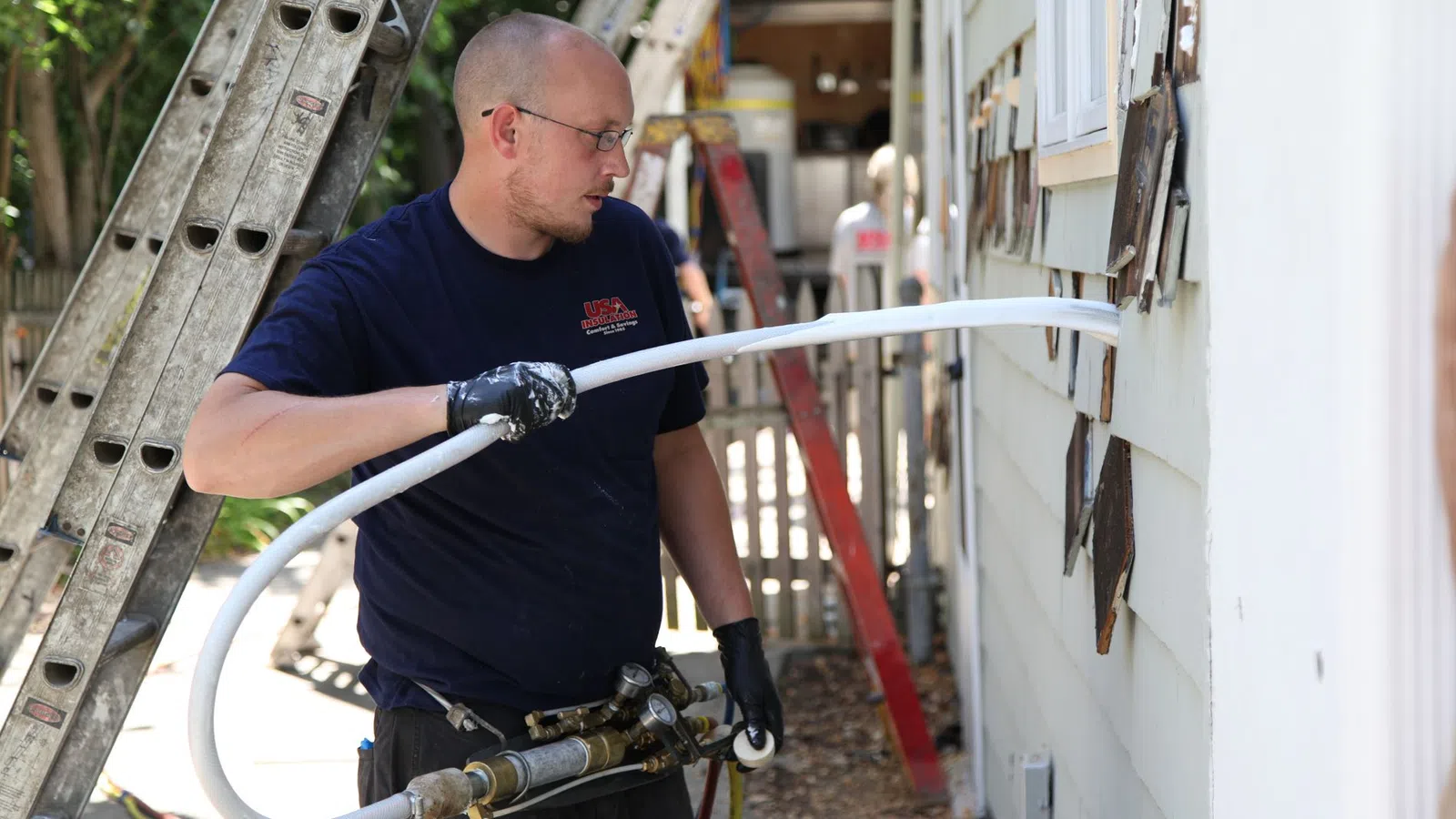
On a sided home, the crew removes a course of siding along each wall to expose the sheathing underneath. They locate the studs and drill a small hole into each wall cavity between them.
On a brick home, the holes go into the mortar joints rather than the brick itself. The crew drills along the joints at each stud cavity.
Either way, they map the wall first, so every cavity gets filled, including the short ones above and below windows and doors.
What happens when the foam goes in?
This is the heart of the job. The crew connects the foam equipment and injects foam through each hole into the cavity behind it. The foam flows around wiring, pipes and outlet boxes and fills the space from bottom to top.
USA Insulation's product for this work is USA Premium Foam, made for walls in homes that are already built.
The crew works wall by wall, filling each cavity and moving on. You will hear the drilling and the equipment running outside, but inside, the house goes on as normal. Many homeowners work from home, cook and go about their day.
What if something unexpected turns up in a wall?
Older houses hold surprises, and a good crew plans for them. A cavity may already have a little old insulation in it, a stud may sit in an odd spot, or a section of wall may be blocked by framing nobody could see from outside.
When that happens, the crew lead should stop and tell you what they found and what they suggest. Sometimes it means an extra access hole to reach a blocked section. Sometimes it means a part of the wall cannot be filled, such as a stretch of solid masonry in an older brick home. You should hear about it on the day, not discover it later.
It is also why the walkthrough at the end matters. It is your chance to ask about anything that did not go exactly to plan.
How are the holes closed up?
Once the cavities are filled, every hole gets plugged.
On sided homes, the siding that came off goes back on over the plugged holes, so nothing is visible when the work is done. On brick homes, the holes in the mortar joints are patched with mortar so they blend with the surrounding joints.
Fresh mortar can look a little different from weathered mortar at first. Ask your crew lead what to expect for your home.
What does cleanup look like?
The crew picks up drill dust, bits of mortar and any packaging and leaves the work area the way they found it. Since the work is outside, there is no dust to chase through your rooms.
Before they leave, the crew lead walks the house with you again. This is your chance to look at the finished walls, ask about anything you notice and confirm everything on the plan was done.
Is attic work part of install day too?
It can be. Many Central Kentucky homes need attic insulation and air sealing along with the walls. If your plan includes both, the crew usually seals the air leaks in the attic first, then blows in insulation to the planned depth.
Central Kentucky is in climate zone 4A. ENERGY STAR recommends R-60 for an attic with no insulation and R-49 when adding to 3 to 4 inches already in place. Attic work happens inside the attic, so the crew will need access to the hatch or pull-down stairs. Clear stored items away from the opening ahead of time.
How will you know the house feels different?
Many people notice it on the first cold evening. Walls that used to feel cold to the touch feel closer to room temperature. Drafts at outlets on outside walls fade. The furnace or heat pump does not have to run as long to hold the temperature.
ENERGY STAR estimates that air sealing and adding insulation in attics, floors over crawl spaces and basement rim joists saves homeowners an average of 15 percent on heating and cooling costs. Results depend on your house, but comfort is usually the first change you feel.
Can install day happen in winter?
Yes. Injection foam can be installed in cold weather, and so can blown-in attic insulation and air sealing. There is no need to wait for spring. If the forecast calls for something severe, ask the office how rescheduling works.
Quick answers for Central Kentucky homeowners
Do I need to be home during the install? It helps to be there for the walkthrough at the start and the end. In between, most of the work is outside.
Will the crew need to come inside? For wall work, rarely. For attic work, they will need access to the attic opening.
Is it loud? There is drilling and equipment noise outside during the day. Inside, it is noticeable but usually not disruptive.
Will I see the holes afterward? On sided homes, no, because the siding goes back over them. On brick, the patched mortar joints are hard to pick out from a normal distance.
How long will the job take for my house? Your written estimate should give the expected time on site, based on the size of your home and the work planned.
Ready to schedule?
If you know your walls need insulation, the next step is a free inspection and a written plan. Request one from USA Insulation Central Kentucky, and we will walk you through exactly how install day would go for your Lexington-area home.