How much attic insulation do you need in Kentucky? Kentucky is in climate zone 4. For this zone, ENERGY STAR recommends R-60 in an attic that has no insulation and R-49 when you are adding to an attic that already has 3 to 4 inches. Many older Central Kentucky homes have far less than either number.
If you have poked your head through the attic hatch in Lexington, Versailles or Paris and wondered whether what you saw was enough, you are asking the right question in the right month. October is mild enough to look around up there, and the answer matters most once the furnace starts running.
Here is what the numbers mean, how to check your own attic in about ten minutes, and what to do if you come up short.
What does R-value mean?
R-value is a measure of how well a material resists heat moving through it. A higher number means more resistance, so heat stays inside longer in winter and outside longer in summer.
R-values add up. If you have a layer rated R-11 and you put a layer rated R-38 on top, the attic floor is at about R-49. That is why adding to what you have often makes sense, as long as the old insulation is dry and in decent shape.
R-value depends on both the material and its depth. Two attics with the same number of inches can have different R-values if the materials differ, or if one has been packed down by storage boxes and foot traffic.
What R-value does ENERGY STAR recommend for Kentucky attics?
All of Kentucky falls in climate zone 4, so the same guidance applies from Frankfort to Richmond. The ENERGY STAR recommendations for our zone are short enough to remember.
- Attic with no insulation: bring it to R-60.
- Attic with 3 to 4 inches already in place: add enough to reach R-49.
- Floors over an unheated crawl space or basement: R-19.
These are targets for comfort and energy use in an existing home. They are higher than what many houses were built with, because expectations for insulation have risen a great deal since the 1960s and 1970s.
R-49 or R-60: which one applies to your house?
It depends on what is in the attic today. If the attic floor is bare or close to it, the recommendation is R-60. If there are already a few inches of insulation in good condition, the goal is to add enough on top to reach R-49.
Many older homes fall into the second group. There is something up there, often a thin layer of old batts or loose fill that has settled, and the practical job is topping it up.
The gap between a few inches and R-49 is large. Closing it is where most of the comfort gain comes from. An inspection tells you which target fits your attic and how far away you are.
How do you check your attic insulation yourself?
You can get a good read without crawling around. Pick a cool morning, grab a flashlight and a tape measure, and follow these steps.
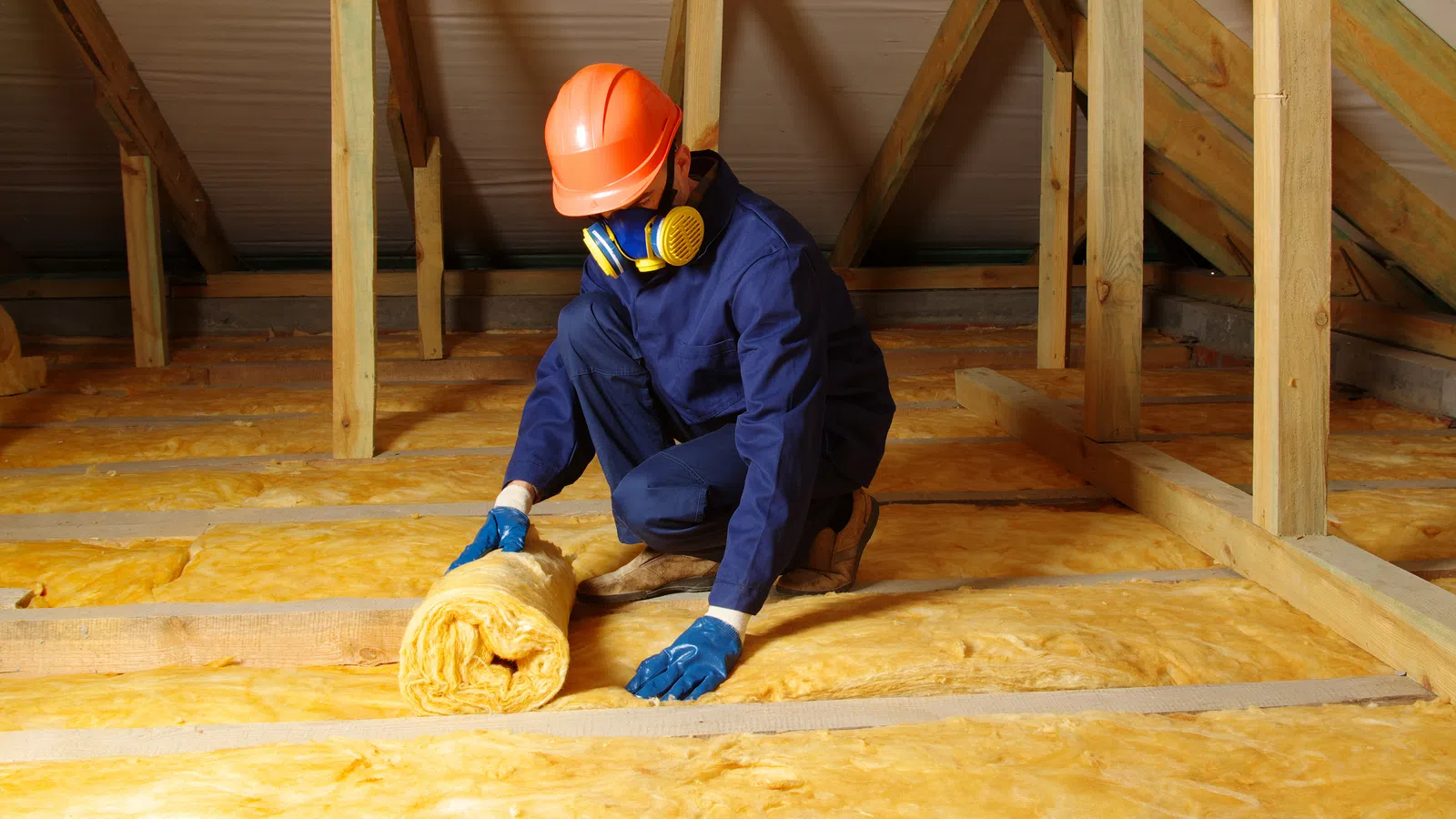
- Look from the hatch. Stand on the ladder with your head and shoulders in the attic. There is no need to walk on the joists, and you should never step between them.
- Find the joists. If you can see the tops of the wooden floor joists across the attic, the insulation is level with them or below. ENERGY STAR says that is a sign you should add more.
- Measure the depth. Push the tape measure straight down to the ceiling drywall in a spot you can reach. Write the number down, and note whether the material is batts or loose fill.
- Check for even coverage. Look for low spots, bare patches near the eaves and places where insulation was pushed aside for wiring or ductwork.
- Look at the hatch itself. A bare, loose hatch cover is a hole in your insulation. It should be insulated on top and sealed where it sits.
- Note anything damp or matted. Wet or flattened insulation does not perform as rated, and the cause needs to be found before more is added.
Bring your depth measurement and a couple of phone photos to your inspection. It speeds things up and helps you follow along with what the inspector finds.
How deep is R-49 in blown-in insulation?
For loose-fill insulation, R-49 works out to well over a foot of depth. The exact number depends on the material, because each product has its own R-value per inch.
This is why a simple rule like "you need a foot" can steer you wrong. The coverage chart for the specific product tells the installer how many inches it takes to reach the target, and that depth should be written on your estimate.
After the job, depth markers in the attic let you see that the insulation reaches the level you paid for. Ask your installer how they mark and document the finished depth.
Why do so many Central Kentucky attics fall short?
Age is the main reason. Lexington and the towns around it have a lot of homes from the 1950s through the 1970s, and those were built to the expectations of their day. A few inches on the attic floor was normal.
Time takes its share too. Loose fill settles, and batts get compressed by stored boxes or moved aside by anyone who has run a cable or serviced a duct. An attic that started thin is usually thinner now.
Newer homes are not exempt. Subdivision homes in Georgetown and Nicholasville can have uneven coverage, gaps around recessed lights and thin spots over bonus rooms, even when the average depth looks fine.
Our climate makes the shortfall easy to feel. Zone 4 brings humid, hot summers and winter cold snaps, so a thin attic costs you comfort in both seasons. The upstairs bakes in August and goes cold in January.
Should you air seal before adding attic insulation?
Yes. Sealing first is the standard order, because the gaps are easy to reach before they are buried under new insulation.
Insulation slows heat, but it does not stop moving air. Warm indoor air rises through gaps around light fixtures, plumbing pipes, wiring holes, the chimney chase and the attic hatch, and it carries heat right past the insulation.
ENERGY STAR estimates that air sealing a home and adding insulation in attics, floors over crawl spaces and basement rim joists saves an average of 15 percent on heating and cooling costs. Every house is different, so treat that as an average and not a prediction for yours.
Can you just add new insulation on top of the old?
Usually, yes. If the existing insulation is dry and reasonably clean, new blown-in insulation can go right over it, and the R-values add together.
There are a few things a careful installer handles first. Soffit vents at the eaves need to stay open so the attic can breathe. Some recessed lights and flues need clearance. Bath fans should vent outdoors and not into the attic.
If the old insulation is wet, heavily matted or damaged, it may need to come out before anything new goes in. That is a call to make after someone has looked at it.
What if the attic is fine but the house is still uncomfortable?
Then look at the walls. Many older Central Kentucky homes have attics that were topped up at some point and exterior walls that were never insulated at all.
Walls in an existing home can be filled with injection foam from the outside through small access holes, with no drywall removal. A whole-house look at attic, walls and air leaks shows where your home is actually losing the most ground.
Frequently asked questions
What R-value should my attic be in Lexington, KY? Lexington is in climate zone 4. ENERGY STAR recommends R-60 for an attic with no insulation and R-49 when adding to an attic that has 3 to 4 inches already.
How do I know if I have enough attic insulation? Look across the attic floor from the hatch. If you can see the tops of the floor joists, the insulation is at or below them and you should add more.
Is more insulation always better? Up to the recommended level, each added layer helps. Past that point the gain gets smaller, so it makes sense to aim for the target for your zone and then look at air sealing and walls.
How long does attic insulation last? Attic insulation can keep working for decades when it stays dry and undisturbed. Roof leaks, pests and heavy storage are the usual reasons it stops doing its job.
How long does it take to add blown-in attic insulation? An attic top-up is usually a short job, and the air sealing is done on the same visit. Your estimate should give the expected time for your home.
Want to know your attic's real number?
Guessing from the hatch only gets you so far. Request a free inspection from USA Insulation of Central Kentucky, and we will measure your attic, check for air leaks and tell you plainly how far you are from the R-value your home needs