
What Wildfire Smoke Leaves Behind Inside Your Home: VOCs, Odor, and How to Clear the Air
Spokane wildfire smoke leaves VOCs like benzene and toluene soaked into your walls, carpet, and insulation. Here is how long they last and what actually clears them out.
Wildfire smoke leaves more than soot behind. It carries volatile organic compounds, or VOCs, including benzene, toluene, ethylbenzene, and xylene. Those chemicals soak into drywall, carpet, upholstery, and insulation, then release slowly back into your air for weeks or months after the smoke clears. Getting them out takes cleaning, filtration, and a tighter house.
After eleven straight days of air that failed federal standards, most of us in Spokane are ready to open the windows and move on. The smoke has thinned, evacuation orders are lifted, and the sky looks like August again. But if your house still smells faintly like a campfire, or your eyes are still itchy indoors, you are not imagining it.
What are VOCs, and why does wildfire smoke carry them?
VOCs are carbon-based chemicals that evaporate easily at room temperature. You already know several by smell: fresh paint, new carpet, gasoline. They move from solid or liquid into the air without much help.
Wildfire smoke is loaded with them. Burning wood and brush releases a large mix of VOCs along with fine particles. When structures burn, and the Spokane Complex took more than 900 homes, the mix gets worse, because building materials and household goods release compounds like benzene and styrene, plus contaminants from older lead paint and asbestos.
Researchers at UCLA studying homes after major urban wildfires found VOC levels were meaningfully elevated during the recovery phase, after the fires were already out. They flagged the BTEX group in particular: benzene, toluene, ethylbenzene, and xylenes. Several of those are known carcinogens.
The fire being out does not mean the exposure is over.
Why does my house still smell like smoke?
Because your house absorbed it.
Fine particles, the PM2.5 behind every air quality alert, mostly stay suspended and can be filtered out. VOCs behave differently. They stick to surfaces. Researchers at CU Boulder who studied homes after the Marshall Fire found smoke VOCs deposit onto walls and other surfaces, then keep off-gassing for weeks to months.
Think of your drywall, carpet, cushions, curtains, and attic insulation as a sponge that filled up over those eleven smoky days. Now it is slowly wringing itself back out into the air you breathe.
Two things make it worse. Heat speeds the release, so a hot upstairs bedroom in August pushes more into the air than a cool morning does. And a closed-up house concentrates it. Keeping the windows shut during the smoke was the right call, but it also meant less dilution, so more of what got in stayed in.
The Marshall Fire follow-up is the number worth knowing. Six months later, surveys found more than half of residents still reporting itchy eyes, headaches, dry coughs, and sore throats. Not people who lost homes. People whose homes were still standing.
Which materials hold onto smoke?
Porosity is the whole story. The more porous and fibrous something is, the more surface area it has to grab VOCs, and the harder it is to clean.
Material |
How much it holds |
What to do |
|---|---|---|
Tile, sealed wood, glass, countertops |
Low |
Wet clean with mild soapy water |
Painted drywall and ceilings |
Moderate |
Wet clean, repaint if odor persists |
Carpet and carpet pad |
High |
Deep clean carpet, replace pad if smell stays |
Upholstery, curtains, bedding, stuffed toys |
High |
Launder or replace |
HVAC filters and ductwork |
High |
Replace filters, inspect ducts |
Attic and wall insulation |
High |
Inspect, replace if soot, ash, or odor is present |
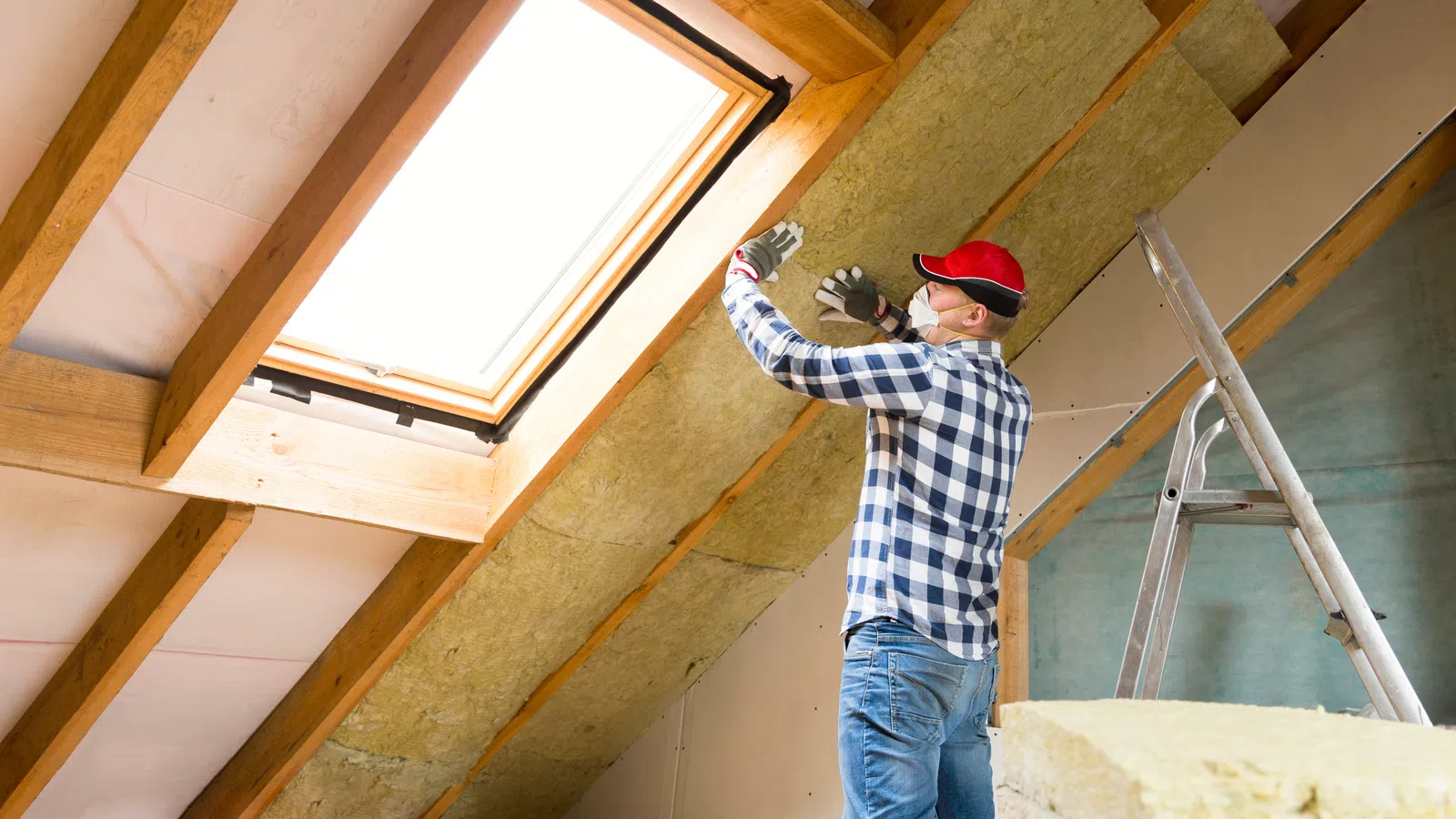
That last row is the one homeowners almost never check. Your attic is vented to the outdoors on purpose, so soffit, ridge, and gable vents pulled smoky air through it continuously for eleven days, and the insulation caught what came through. We covered that in detail in a separate post.
What actually clears smoke VOCs out
In roughly the order worth doing it:
- Wet clean hard surfaces with diluted soapy water. Wet the surface first so you are not kicking ash back into the air. The CU Boulder team advises against vinegar and TSP cleaners, which react badly with ash residue.
- Upgrade your furnace filter to MERV 13 or higher if your system can handle it, and change it monthly until the smell is gone. A clogged filter is not filtering.
- Run a portable air cleaner with both HEPA and activated carbon. This combination matters. HEPA captures particles, but activated carbon is what adsorbs the VOCs causing the odor. A HEPA-only unit clears the haze and leaves the smell.
- Wash or remove the soft stuff. Bedding, curtains, throw pillows, kids' stuffed animals were all identified as prolonged re-emission sources.
- Vacuum with a HEPA vacuum. A standard shop vac blows fine particles right back into the room.
- Ventilate when outdoor air is genuinely good. Check the Spokane Regional Clean Air Agency first. Readings have been sitting in the moderate range with an alert still posted, so pick your mornings.
The encouraging part from the CU Boulder work: only a limited mass of VOCs got absorbed, so the release does taper off. It genuinely gets better. It just takes longer than people expect.
The step most people skip: sealing the house
Everything above is cleanup. This part is prevention, and it is where Spokane and Coeur d'Alene homeowners get the most lasting benefit.
Smoke gets in three ways: open windows and doors, mechanical ventilation like bath fans and fresh air intakes, and infiltration through cracks and gaps in the building envelope. You control the first two easily. The third is the problem, and in homes built before 1980, which describes a large share of the housing stock here, it is usually the biggest one.
Older homes in this region leak at the rim joist where floor framing meets the foundation, around plumbing and wiring penetrations, at attic hatches and recessed lights, and around window and door frames. Those gaps are why your house filled with smoke smell even with every window closed. They are also why your bills are high in January and your upstairs is unbearable in July.
Air sealing plus properly insulated walls and attic does three jobs at once. It cuts what comes in from outside, it evens out the hot and cold rooms, and it lowers the energy bill. Injection foam fills existing wall cavities around the wires and pipes that batts never reach, and it goes in through small access holes with no drywall removal.
Fire season is not over. The next smoke event will find whatever gaps you have not closed.