
If you own an older home in the Spokane and Coeur d'Alene area, you already know its quirks: rooms that are stifling in summer and drafty in winter, temperatures that never feel even from one room to the next, and energy bills that seem high for the size of the place. A lot of that traces back to one thing: the walls were built with little or no insulation.
The frustrating part has always been that fixing wall insulation seemed to mean a full remodel: tearing out drywall, making a mess, and spending a fortune. Injection foam changes that. Here's what it is and why it's such a good fit for homes like yours.
What injection foam insulation is (in plain English)
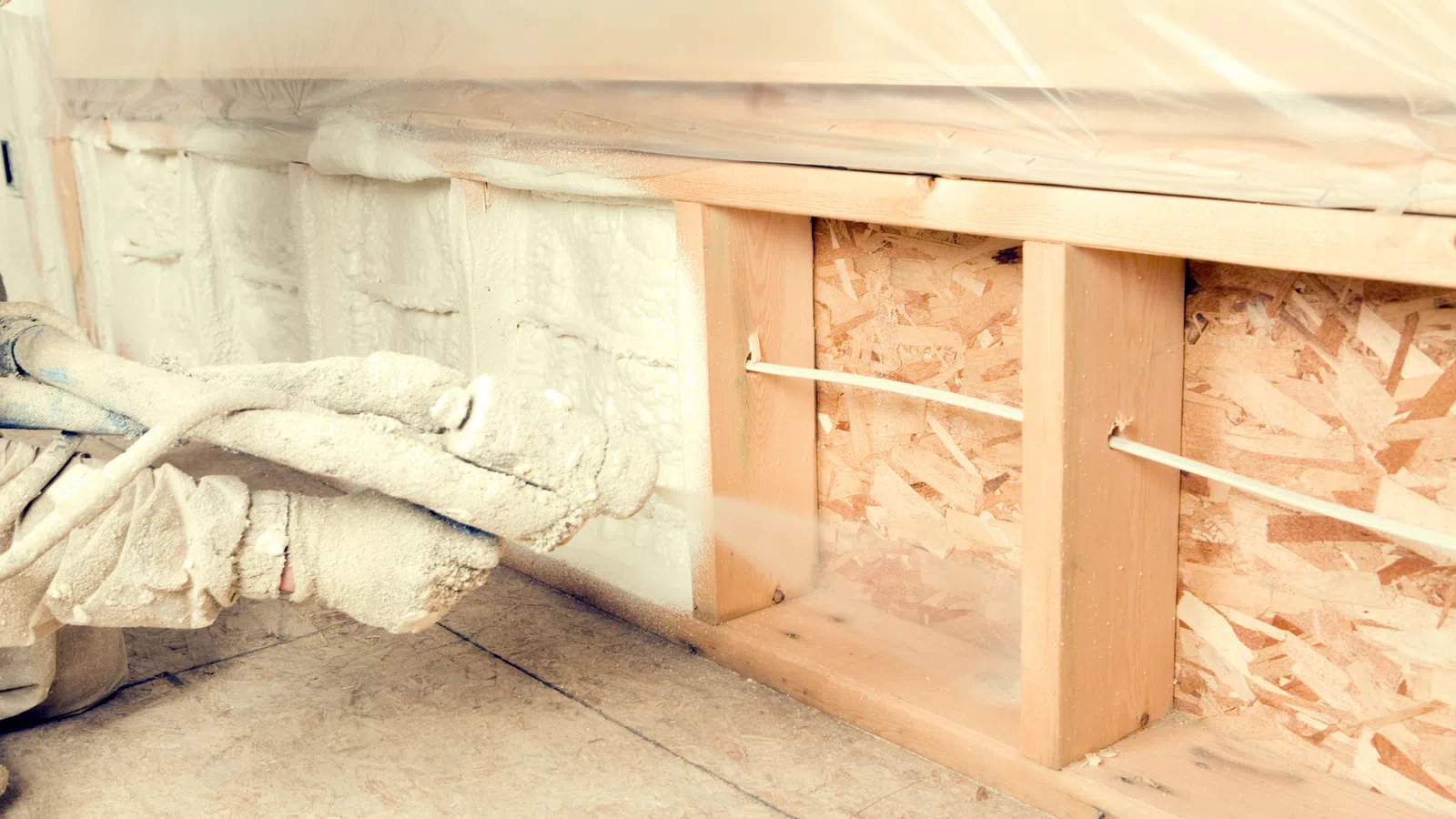
Injection foam is a slow-expanding foam that's pumped into the hollow cavities inside your existing exterior walls through small access holes, with no drywall removal required. It flows around wiring and pipes, fills the gaps that let air move, and adds real insulating value to walls that were built with little or nothing inside them.
Think of your exterior walls as a series of empty vertical boxes between the studs. In many older homes, those boxes are just empty. Injection foam fills them. Once it's in and cured, it stays put. It doesn't sag or settle the way some loose materials can, so the wall keeps performing for the life of the home.
How the install works, step by step
One of the best things about injection foam is how little it disrupts your life. Most homes are completed in about a day. Here's how it goes:
- We locate the wall cavities and plan the access points, working from the outside of your home in most cases.
- We drill small access holes in the siding, the mortar joints of brick, or the stucco, sized just big enough to reach each cavity.
- We inject the foam, filling each cavity completely from bottom to top. The foam expands slowly to work its way around obstacles and fill every gap.
- We plug and patch the holes to match your existing finish, then clean up.
No knocking out drywall. No living in a construction zone. You get insulated walls and your house back the same day.
Why it's ideal for homes built before 1980
Here's the heart of it: injection foam was made for finished walls that are already closed up, which is exactly the situation in most pre-1980 homes.
Homes built before modern energy codes were often framed with empty wall cavities. You can't easily add insulation to a finished wall the "normal" way without opening it up. Blown-in materials can be an option, but they can settle over time and don't seal against air movement as tightly. Injection foam solves the whole problem at once: it goes into the closed wall, fills it, and air-seals it, without demolition.
That's why it's such a natural fit for the older housing stock across Spokane and North Idaho: the bungalows, ranches, and mid-century homes that have great bones but were never built to hold heat.
Injection foam vs. spray foam vs. blown-in
People mix these up all the time. Here's the quick difference:
Injection foam |
Spray foam |
Blown-in (cellulose/fiberglass) |
|
|---|---|---|---|
Best for |
Closed, finished existing walls |
Open walls & attics during construction/remodel |
Attics and open or accessible cavities |
Drywall removal? |
No |
Yes (walls must be open) |
Usually no for attics; walls need access |
Air sealing |
Strong, fills gaps as it expands |
Strong |
Weaker, doesn't seal air movement as tightly |
Settling over time |
No |
No |
Can settle, reducing performance |
Typical use in older homes |
Retrofitting existing walls |
Renovations where walls are already open |
Attic top-offs |
For an older home with finished walls you don't want to tear open, injection foam is almost always the right call. (We go deeper on this in our full (comparison guide.)
What R-value it adds to your walls
R-value measures how well insulation resists heat flow, and higher is better. Many older Spokane homes have walls sitting close to R-0, meaning they do almost nothing to slow heat loss. Injection foam fills those empty cavities and brings the wall up to a meaningful R-value, turning a wall that leaked heat all winter into one that actually holds it.
The exact number depends on your wall's construction, but the practical result is what you'll feel: walls that aren't cold to the touch, rooms that hold their temperature, and a furnace that doesn't have to work as hard. It also helps in summer, keeping the heat out and your upstairs cooler.
Does injection foam qualify for Avista rebates?
Good news for local homeowners: wall insulation upgrades on existing homes can qualify for Avista rebates, and as an Avista preferred vendor, we help make claiming them straightforward.
Avista's residential wall-insulation rebate is designed for homes going from essentially no wall insulation up to a qualifying level, which is exactly what injection foam does. The work has to be professionally installed with an itemized invoice showing the details, which is standard for us. We'll confirm your eligibility and the current rebate amount when we quote your project, and if you'd rather spread the cost out, we offer financing too.
(Rebate amounts are set by Avista and can change, so we'll verify the current figure for your home at the time of your quote.)
If your older home has cold walls and high bills, injection foam is one of the highest-impact upgrades you can make, and one of the least disruptive.
Want to know if your walls are a good fit? Get a free injection foam quote and we'll take a look.