
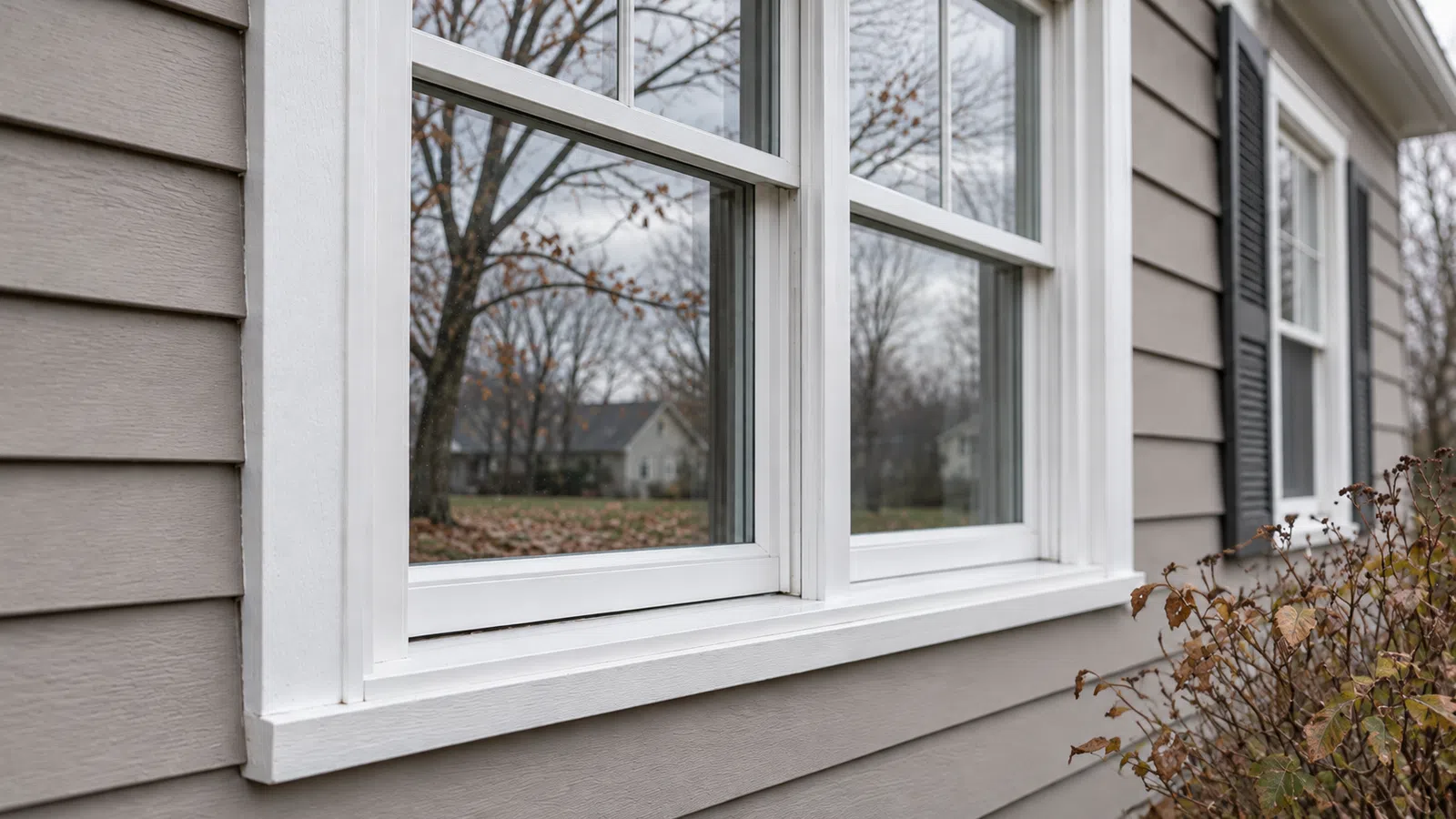
When a room feels drafty or the utility bills climb, the windows usually get blamed first. You can see them, you can feel cold air near them, and window replacement is heavily advertised. So, do new windows lower energy bills? They can, and in some homes they make a real difference. How much depends on what you're replacing and whether the windows are really where your home loses the most energy.
This guide covers the savings question only: what new windows change, what they don't, and how to tell whether your windows or your insulation are potentially behind the high bills.
Quick Answer: Do New Windows Lower Energy Bills?
Yes, new windows can lower energy bills, but the size of the savings depends mostly on what you're replacing. ENERGY STAR estimates that replacing single-pane windows with ENERGY STAR-certified windows lowers household energy bills by an average of up to 13% nationwide. If your current windows are already double-pane and in good shape, the improvement will be smaller.
It also helps to know how big a role windows play.
According to the U.S. Department of Energy, heat gain and loss through windows account for 25% to 30% of residential heating and cooling energy use. That's significant, and it also means most heating and cooling energy is lost or gained somewhere else.
What Do New Windows Fix, and What Don't They Fix?
What a Window Replacement Changes
A quality replacement window improves the parts of your home that are actually window:
- The glass: Double- or triple-pane units, low-E coatings, and gas fills slow heat moving through the glass in both winter and summer.
- The sash and frame: New units close tighter, which cuts drafts that leak around worn sashes and failed weatherstripping.
- Condensation and fogging: A failed seal can't be fixed by insulating the walls. A new window solves it.
- Damage and function: Rotted sills, broken balances, and windows that won't lock are repaired with replacement.
These are real benefits, and in homes with old single-pane or damaged windows, they're often the right fix.
What It Leaves Untouched: Walls, Attic, and Air Leaks
New windows don't change anything outside the window opening. They won't add insulation to empty or underfilled exterior walls, top up a thin attic, or seal the gaps where conditioned air escapes: top plates, rim joists, attic hatches, recessed lights, and plumbing and wiring penetrations.
In most homes, walls and ceilings make up far more of the exterior surface than glass does. If those surfaces are poorly insulated, new windows can leave a room feeling nearly as uncomfortable as before.
Why Does Insulation Often Have a Bigger Effect on Comfort and Bills?
It comes down to surface area and air movement. Walls, attics, and floors cover most of your home's thermal envelope, and air leaks let heated or cooled air slip out through dozens of small gaps. Many older homes, especially those built before modern energy codes, have little or no insulation in the exterior walls, and attic insulation tends to settle over time.
ENERGY STAR says sealing air leaks and adding insulation can provide up to a 10% savings on annual energy bills. That's in the same range as the window figure, but the two numbers apply to different homes. The window estimate assumes you're replacing single-pane windows. The seal-and-insulate estimate applies far more broadly, including homes whose windows are already double-pane.
Comfort follows the same logic. An uninsulated wall is cold to the touch in winter, and you feel that cold surface across the whole room, not just near the window.
Comparison Table: Window Replacement vs. Insulation Plus Air Sealing
Factor |
Window Replacement |
Insulation Plus Air Sealing |
What it targets |
Glass, frame, and leaks at the sash |
Walls, attic, floors, and leaks across the home |
Role in energy use |
Windows account for 25% - 30% of heating and cooling energy use |
Addresses the remaining surfaces and air leakage paths |
ENERGY STAR savings estimate |
Average of up to 13% on energy bills when replacing single-pane windows |
Up to 10% on annual energy bills |
Comfort issues it solves |
Drafts at the sash, cold glass, condensation between panes |
Cold walls, uneven rooms, hot upstairs, attic heat |
Problems only it can fix |
Failed seals, rot, broken or inoperable windows |
Empty wall cavities, thin attic insulation, hidden air leaks |
Best fit |
Single-pane, failed, or damaged windows |
Older homes with little or settled insulation |
How Do I Know if My Windows Are the Real Problem?
Checklist: Failed Seals, Single-Pane Glass, Rot, and Drafts at the Sash
Your windows are a likely culprit if you notice:
- Single-pane glass: This is the scenario where ENERGY STAR's savings estimate applies.
- Failed seals: Fog, moisture, or a milky film between the panes of a double-pane window
- Rot or water damage: Soft wood, peeling paint, or staining at the sill or frame
- Drafts at the sash: Air moving where the sash meets the frame, not just around the interior trim.
- Hardware that doesn't work: Windows that won't stay open, close fully, or lock tightly
- Frost or ice on the inside of the glass in cold weather.
If several of these apply, replacement is probably the right call, and no amount of insulation will fix a rotted sill or a fogged unit. If your windows are structurally sound, repairs and upgrades like weatherstripping, caulk, and storm windows may be the most cost-effective option.
How Do I Know if the Problem is Insulation Instead?
Cold Walls, Uneven Rooms, and a Hot Attic
These signs point past the windows to the walls, attic, and air leaks:
- Cold walls: In winter, the inside of an exterior wall feels noticeably colder than an interior wall.
- Uneven rooms: Some rooms or an entire floor stay hotter or colder than the thermostat setting.
- A hot attic and upstairs: Upper floors overheat in summer, or ice dams form along the roof edge in winter.
- Drafts away from windows: Air moving at outlets, baseboards, or the attic hatch on exterior walls.
- High bills after new windows: If you've already replaced the windows and bills barely moved, the bigger losses are likely elsewhere.
What Should I Do First?
Start with the symptom, not the product. The table below matches common problems to their likely cause. For a full walkthrough of how to sequence multiple upgrades, see our guide on which home energy upgrades to do first.
Decision Table: Symptom, Likely Cause, First Step
Symptom |
Likely cause |
First step |
Fog or moisture between panes |
Failed window seal |
Repair or replace the affected unit |
Single-pane windows with drafts at the sash |
Inefficient windows |
Get quotes for ENERGY STAR certified windows |
Soft or rotted sills and frames |
Window damage |
Replace the damaged windows |
Exterior walls cold to the touch |
Missing or settled wall insulation |
Schedule an insulation inspection |
Hot upstairs, hot attic, or ice dams |
Attic insulation or air leaks |
Have the attic inspected |
Drafts at outlets and baseboards |
Air leaks in the walls |
Air seal and check wall insulation |
Bills still high after new windows |
Heat loss elsewhere in the home |
Schedule an insulation inspection |
A mix of window and wall symptoms |
Both |
Schedule an insulation inspection |
When an Energy Assessment Settles the Question
When symptoms overlap, a professional energy assessment removes the guesswork. The two most common techniques are a blower door test to measure air leakage and an infrared scan to show where heat is escaping through walls, ceilings, and windows. The results show which upgrade will do the most for your home before you spend money on either one.
At USA Insulation, we can inspect your walls and attic and tell you whether insulation is part of the problem. If your windows turn out to be the bigger issue, we'll tell you that, too. You can trust our teams to provide your home with the right solution.
Frequently Asked Questions
How much do new windows actually save on energy bills?
ENERGY STAR estimates that replacing single-pane windows with ENERGY STAR certified windows lowers household energy bills by an average of up to 13% nationwide. Savings are typically smaller when replacing double-pane windows that are still in good condition, and they vary with your climate and the rest of your home's envelope.
Should I replace windows or add insulation first?
It depends on what's failing. If windows are single-pane, fogged, rotted, or won't close, start there. If windows are sound but walls feel cold, rooms are uneven, or the attic runs hot, insulation and air sealing usually address more of the problem. An insulation inspection can confirm the right solution for your home.
Can old windows be part of the problem even if insulation is also needed?
Yes. Many older homes have both drafty windows and under-insulated walls or attics. DOE attributes 25% to 30% of residential heating and cooling energy use to heat gain and loss through windows, so windows matter. They just aren't the whole picture, and fixing one doesn't fix the other.
Are energy efficient windows worth it for lowering bills?
They're most worth it when they replace single-pane, damaged, or failed windows, which is where ENERGY STAR's savings estimate of up to 13% applies. If your existing windows are double-pane and sound, DOE suggests repairs like weatherstripping and storm windows may be more cost-effective, and insulation may lower bills more.
Why are my energy bills still high after replacing windows?
New windows only improve the window openings. If your walls lack insulation, the attic is under-insulated, or air leaks through gaps at the top plates, rim joists, and penetrations, most of your heat loss continues. An insulation inspection can show where you may be losing energy the most.